Hooked Up Safely: A Guide to Road-Ready Vehicle Towing
Towing a vehicle may seem straightforward, but it requires careful planning, the right equipment, and strict adherence to safety guidelines. Whether you are a professional tow truck operator or a driver helping a friend in distress, ensuring that both the towing vehicle and the vehicle being towed are road-ready is crucial. A small oversight can lead to accidents, vehicle damage, or even legal issues. This guide will walk you through essential steps and tips for safe towing.
1. Know Your Vehicle’s Towing Capacity
Before hooking up any vehicle, it’s essential to understand the towing capacity of your vehicle. Towing capacity is the maximum weight your vehicle can safely pull, including the weight of the trailer or vehicle being towed. Exceeding this limit can strain the engine, transmission, brakes, and suspension, potentially causing severe mechanical failure. Consult your owner’s manual or manufacturer’s specifications to verify your vehicle’s limits, and never make assumptions based on guesswork.
2. Use the Right Towing Equipment
Having the proper towing equipment is critical. This includes the tow hitch, chains or straps, and the towing mechanism—whether it’s a flatbed, hook and chain, or wheel-lift system. Make sure all equipment is rated for the weight of the vehicle being towed. Inspect everything for signs of wear, rust, or damage before every tow. Using substandard or damaged equipment is a leading cause of towing accidents.
In addition, lighting and signaling equipment play a vital role. For professional tow trucks, a tow truck light bar ensures that other drivers are aware of your presence on the road, especially during nighttime or low-visibility conditions. If you’re towing with a personal vehicle, ensure that your brake lights, turn signals, and hazard lights function correctly.
3. Secure the Vehicle Properly
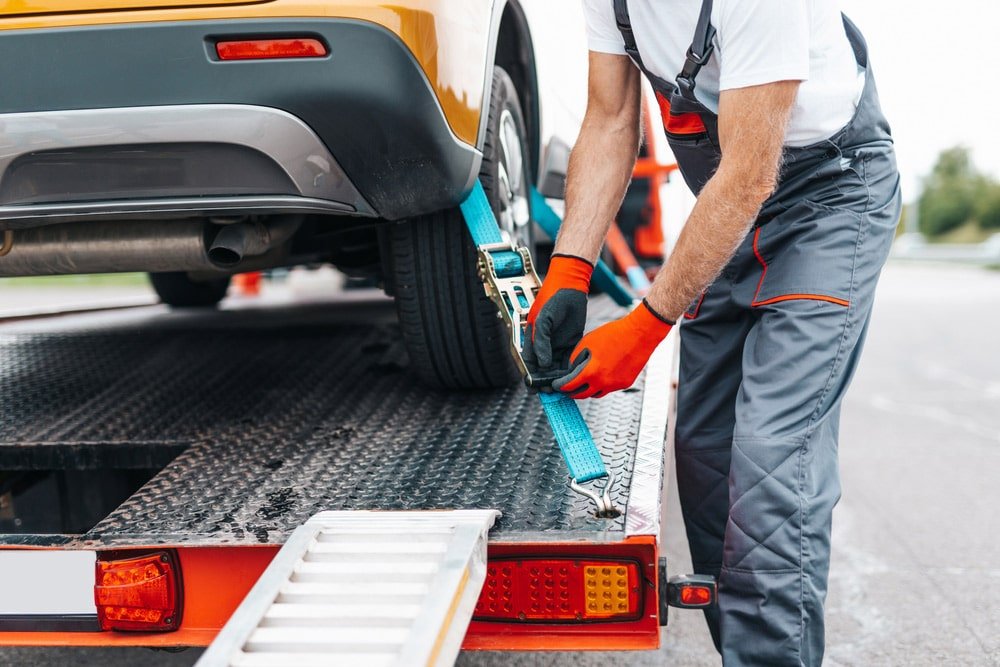
The way the towed vehicle is attached can make a huge difference in safety. Double-check that chains, straps, or towing arms are securely fastened and that the vehicle is balanced correctly. Improperly secured vehicles can sway, detach, or damage the towing vehicle. For flatbed towing, ensure that the vehicle is centered and all wheels are properly strapped down. Wheel-lift systems require correct placement of the lift arms and safety chains.
4. Adjust Your Driving Habits
Driving while towing is different from normal driving. Acceleration, braking, and turning all require extra caution. Here are some key adjustments to keep in mind:
- Increase Following Distance: Towed vehicles add weight, increasing stopping distance. Leave at least double the normal following distance.
- Brake Gradually: Sudden braking can cause the towed vehicle to jackknife or sway. Start braking earlier and gently apply pressure.
- Take Wider Turns: The added length of a towed vehicle means tighter turns can lead to curb strikes or collisions with obstacles.
- Maintain a Moderate Speed: Driving too fast can reduce control and stability. Stick to recommended towing speeds, usually below highway limits.
5. Be Aware of Road Conditions
Road conditions play a crucial role in towing safety. Wet, icy, or uneven roads increase the risk of skidding and loss of control. Avoid sudden maneuvers and be especially cautious on downhill slopes. If you are towing long distances, plan your route to avoid sharp curves, steep inclines, and areas with heavy traffic whenever possible.
6. Regularly Inspect During the Tow
Long-distance towing requires periodic checks. Stop at safe intervals to inspect the connections, chains, straps, and tires of both vehicles. Make sure nothing has loosened, shifted, or overheated. Tires on both the towing and towed vehicles should be checked for proper inflation to prevent blowouts or damage.
7. Know the Legal Requirements
Towing regulations vary by state and country. These can include requirements for brake systems on towed vehicles, lighting, towing speed limits, and trailer licensing. Failing to comply with local laws can lead to fines, liability in case of an accident, and other legal complications. Always research the legal requirements before towing any vehicle.
8. Prepare for Emergencies
Even with careful planning, emergencies can happen. Carry a roadside emergency kit with items such as reflective triangles, a flashlight, gloves, basic tools, and extra straps or chains. Having a plan for breakdowns or accidents can make the difference between a manageable situation and a serious hazard.
In Conclusion
Safe towing is a combination of knowledge, preparation, and attention to detail. From knowing your vehicle’s towing capacity to using the proper equipment, adjusting driving habits, and staying aware of legal requirements, each step contributes to a secure and smooth towing experience. By following these guidelines, you can ensure that your journey—whether short or long—is as safe and stress-free as possible. Hooking up safely doesn’t just protect your vehicle; it safeguards everyone sharing the road.