Epodned Explained: A Modern Framework for Productivity, Efficiency, and Digital Ecosystems
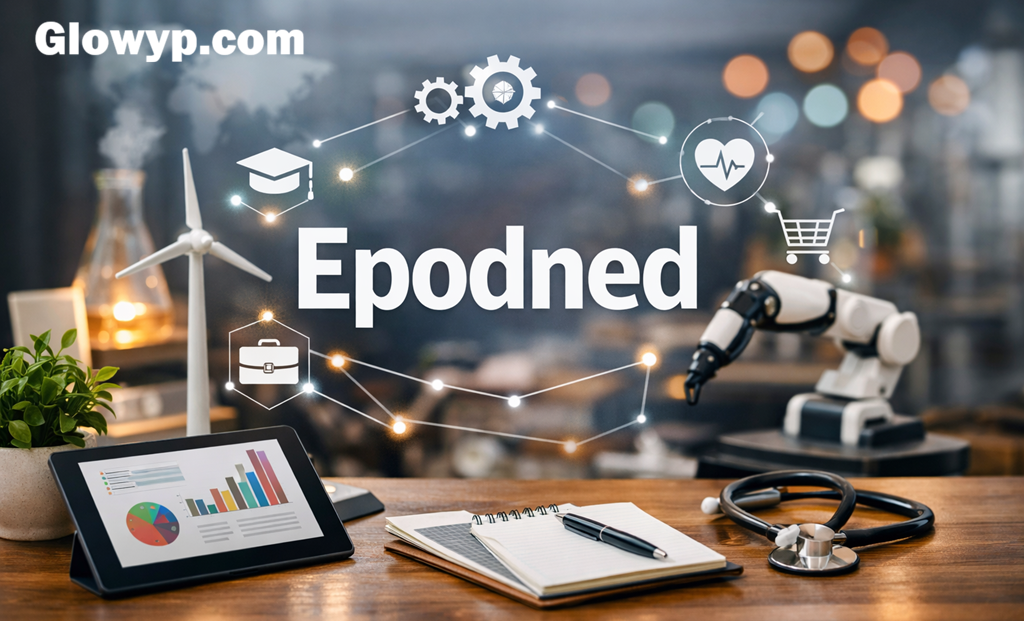
Epodned is a flexible productivity and digital efficiency framework designed to simplify workflows, reduce friction, and improve outcomes across industries. It combines user-centered design, adaptable systems, and emerging technologies to help individuals and organizations work smarter without adding complexity.
What Is Epodned?
Epodned is best understood as a conceptual framework, not a single product or company. It represents a modern approach to solving everyday operational and digital challenges by focusing on three core principles:
- Efficiency through simplification
- Creativity through flexible design
- Practical application in real-world environments
Rather than forcing users to adapt to rigid systems, Epodned adapts to how people actually work. This makes it relevant for individuals managing daily routines, as well as organizations handling complex workflows across teams and departments.
Why Epodned Is Gaining Attention
Many productivity tools and digital platforms fail for the same reason. They add layers instead of removing them. Epodned takes the opposite approach.
Its growing appeal comes from its ability to:
- Reduce unnecessary steps in workflows
- Lower the learning curve for users
- Support both traditional operations and emerging digital models
- Scale without forcing constant system changes
Because of this, Epodned is often discussed in both productivity contexts and conversations about future digital ecosystems.
Core Principles Behind Epodned
1. User-Centered Design
Every Epodned-based system starts with the end user. Interfaces are intuitive, instructions are clear, and workflows are designed to minimize confusion rather than showcase features.
2. Modular Structure
Processes are broken into smaller, repeatable components. This allows teams to improve one part of a system without disrupting everything else.
3. Reliability Over Time
Epodned favors stable, long-term performance instead of short-term optimization. Systems are built to remain useful under regular use.
4. Flexibility Across Contexts
The same framework can be applied in education, business, healthcare, technology, or personal productivity without losing its core value.
5. Responsible Efficiency
Many implementations emphasize sustainable practices, including reduced waste, better energy use, and smarter allocation of time and resources.
Key Benefits of Using Epodned
Improved Productivity
By removing friction and simplifying decision paths, users can focus on meaningful tasks rather than managing tools or processes.
Time and Cost Savings
Simpler workflows reduce repetition, errors, and delays. This often leads to noticeable efficiency gains without sacrificing quality.
Better User Experience
Clear structure and reduced complexity lower frustration and cognitive overload, especially for non-technical users.
Scalable Growth
Whether used by one person or a large organization, Epodned adapts as needs evolve.
Industry Applications of Epodned
Education
- Digital classroom organization
- Assignment and progress tracking
- Clear visibility into learning outcomes
Business and Operations
- Workflow coordination across teams
- Improved documentation and handoffs
- More effective remote and hybrid collaboration
Healthcare and Administration
- Standardized intake and data organization
- Reduced administrative errors
- Clear audit trails and accountability
Technology and Development
- Modular planning and delivery pipelines
- Faster iteration with fewer bottlenecks
- Cleaner system integration
Personal Productivity
- Home and task organization
- Goal tracking and habit building
- Financial and wellness management
How Epodned Improves Productivity in Practice
Epodned enhances productivity through three practical mechanisms.
Process Simplification
Complex tasks are divided into clear steps that feel manageable rather than overwhelming.
Friction Reduction
Unnecessary approvals, duplicated actions, and confusing interfaces are removed.
Smarter Resource Management
Time, attention, and tools are directed toward actions that create real value.
The Digital Ecosystem Layer of Epodned
Beyond productivity, Epodned is often discussed as a blueprint for future digital ecosystems. In this context, it emphasizes:
- User ownership instead of centralized control
- Adaptive intelligence that improves systems over time
- Content and data structures that move across platforms easily
Some discussions link this layer to technologies such as automation logic, decentralized governance models, and modular content systems. Importantly, these ideas can be applied with or without blockchain, depending on the use case.
Challenges and Limitations
While the framework is flexible, it is not without challenges.
- The term itself is not formally standardized
- Over-automation can cause confusion if applied too early
- Adoption depends on clear definition and training
- Governance models require careful planning in regulated environments
Successful use depends on defining scope clearly and implementing changes gradually.
Future Outlook
As workflows become more distributed and digital systems more complex, frameworks like Epodned are likely to gain relevance.
Future development trends often associated with it include:
- AI-assisted automation
- Mobile-first system design
- Better interoperability between tools
- Customization without increased complexity
Rather than replacing existing systems, Epodned tends to sit on top of them, improving how they function together.
Final Thoughts
Epodned is not a shortcut or a trend label. It is a practical way of thinking about efficiency, usability, and system design in a world where complexity keeps increasing.
When clearly defined and applied with intention, it helps individuals and organizations achieve better results with fewer obstacles. That is why interest in Epodned continues to grow across productivity, business, and digital ecosystem discussions.
Frequently Asked Questions
Is Epodned a real product or company?
No. It is commonly described as a concept or framework rather than a single verified platform.
Can non-technical users apply it?
Yes. The framework emphasizes clarity and usability over technical depth.
How long does implementation take?
Initial improvements are often visible within weeks. Full adoption depends on scale and complexity.
Does it require advanced technology?
Not necessarily. Many principles can be applied using simple tools and clear processes.