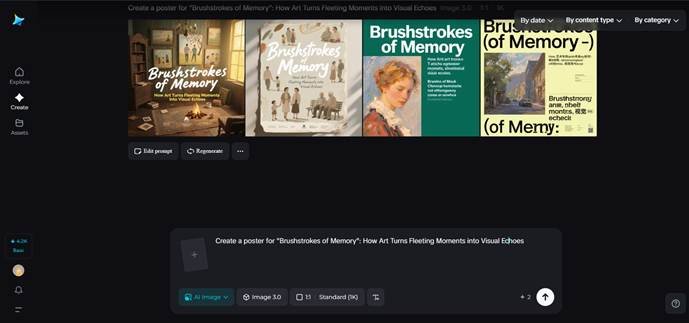
Brushstrokes of Memory: How Art Turns Fleeting Moments into Visual Echoes
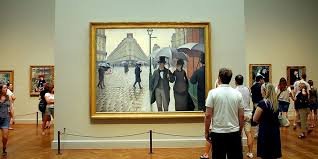
There’s significance in art’s ability to recall what will be forgotten by time. A brush and take on the feel of the goodbye, the glint of the sun on an old window, the rhythm of laughter in the room. Every texture, every imperfect swirl of color has a pulse, or a heartbeat of memory that is waiting for an opportunity to be seen again.
Digital art that once seemed too refined or too distant now hums with that same emotional static. With the aid of tools like Dreamina and its AI image generator, artists now paint from memory, not translating it to living pixels. And these are not just images. They are echoes. Somewhat blurry, softly glowing, and filled with warmth from something that was once tangible and is hopefully no longer.
The quiet science of sentiment
Memories never return as they were. They come back faded, tinted, or softly distorted — and that’s what makes them human. Artists have long understood this fragile distortion and turned it into language. The texture of memory lies not in detail but in tone, in the way light wavers or how color seeps past the lines.
Emotion, when translated visually, hides in:
- Texture: The roughness of strokes or digital noises reproduces the effect of time brushing against memory.
- Lighting: diffused highlights or soft glare-imitating quality, as if nostalgia blurred our perception.
- Color bleed: Gentle overlaps in the images make them feel unrestrained, like recollections spilling into each other.
- Imperfection: A smudge, crack, or fade lends to digital compositions something of the warmth of the handmade.
Each of these becomes a way to remember. Artists today no longer try to attain total clarity. They seek truth, which is usually in the between.
When memory moves: Creating living recollections
Still images whisper; moving ones breathe. A new form of storytelling unravels at the threshold of our times, where art not only captures a memory but replays it in subtle loops, as if the moment refuses to end. It is here that the AI video generator acts as a tool for emotional rhythm.
For artists and marketers alike, motion becomes emotion. Imagine a campaign where a nostalgic painting gently flickers like old film, or a brand video where textures fade in and out as though they’re recalling the past. Each frame tells a story that doesn’t stop when the video stops; it lingers, echoing quietly in the viewer’s mind.
Expressing emotion through Dreamina could be accomplished by:
- Looped gradients to call forth the ebb and flow of memory.
- Fading transitions that create a dreamlike tempo.
- Moving brushstrokes that appear and dissolve like memories.
- Layered depth in which the light feels alive and responsive.
The future of visual storytelling may not be accuracy — it will be persistence. Giving memory motion.
The art of incomplete remembering
Every museum or gallery has one understanding, the power of un-said. Memory does not come back whole, and that lack of wholeness is its beauty. That restraint in the design speaks quantum. The artist is using soft gradients, gentle cracks, and meant empty space to let us imaginate to fill the gaps.
Digital art does is not different. Pixels containing the warmth of human imperfection, if used as paint can it hold. Conscious incompleteness is the point: allowing the picture to be more than the image.
Dreamina’s simulation of this emotional restraint allows digital artists a new type of control. You can add textures that feel aged, lighting that flickers like nostalgia, or layers that seem half-remembered. With every adjustment, the image becomes less about accuracy and more about atmosphere.
Memory doesn’t require precision. It requires presence.
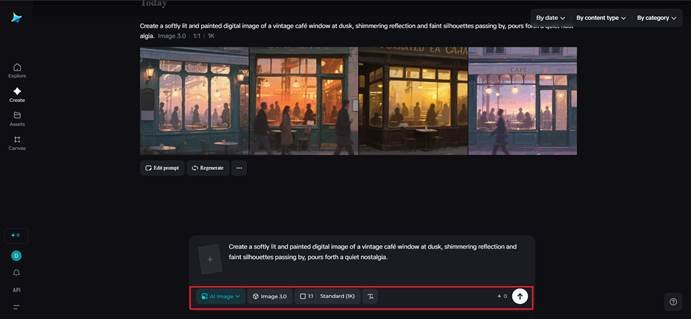
Step 1: Write a descriptive text prompt
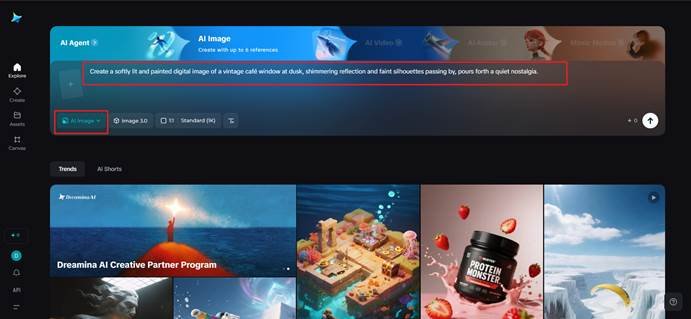
Fire up Dreamina and let your memory be your guide. Rather than detailing the appearance of something, detail the feeling it conveyed. Your text prompt should encapsulate emotion into the imagery.
For example: A softly lit and painted digital image of a vintage café window at dusk, shimmering reflection and faint silhouettes passing by, pours forth a quiet nostalgia.
Such detailed descriptions afford Dreamina the ability to capture not just form but also feeling: The subtle hue and light that each of our memories inherently comes laden with.
Step 2: Tweak parameters and generate
Then, refine the model, aspect ratio, size, and resolution (1K or 2K) according to your imagination. A vertical format might be more intimate, while a wide frame may evoke cinematic memory. Once satisfied, click on the icon of Dreamina to generate your image. And in an instant, the scene changes into a visual echo, like something remembered, not just rendered.
Step 3: Personalize and download
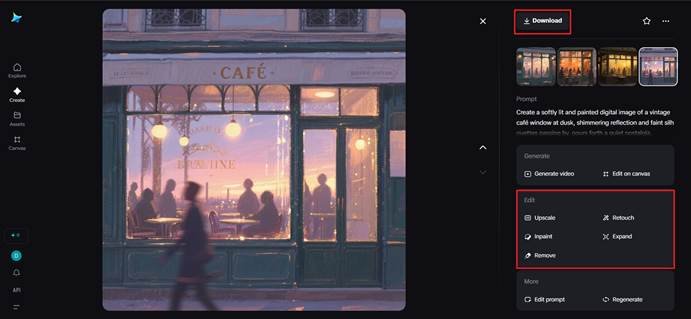
Emphasize emotional texture with the creative customization that Dreamina has to offer. Adjust lighting or add missing details with inpaint, expand to reveal more about the setting, remove to simplify the frame, or retouch to soften imperfections while maintaining authenticity. When your image feels alive with sentiment, click Download to save your finished piece-a visual memory reborn through digital art.
When color becomes recollection
The most beautiful thing about memory is how color lies. A red from childhood might be warmer, a blue sky might hum with softness-because in remembering, emotion edits reality. This phenomenon shapes the very way we approach digital color grading, even in marketing and design.
Artists now consciously “remember in color.” Brands use this same psychology to trigger feeling:
- Sepia and beige hues recall comfort and safety.
- Soft teal and pale lilac are dreamily calming.
- Gold and rose highlights feel warm and intimate.
- High-contrast shadows suggest depth, distance, or longing.
Dreamina’s outputs often bring these emotional spectrums into being naturally, for AI understands color not as a formula, but as a mood. It changes tone-the quiet emotional undertone in what we describe-into color stories that feel remembered.
Emotion as texture: crafting memory through art
The emotion gets converted into a technique via Dreamina’s AI art generator. It extends the palette beyond pigment, into time itself, via human intention combined with AI interpretation. Artists could now simulate the grain of memory, blur the edges of truth, and build atmosphere with data-driven intuition.
As with Dreamina, art doesn’t just depict; it recalls. You can create visuals that have depth, nostalgia, and warmth even in their digital smoothness. The imperfections that once made analog art special-brushstrokes, paper texture, light leaks-can now be reimagined with precision and soul.
Conclusion: where memories linger
Art has always been humanity’s way of refusing to forget. Now, with Dreamina, that language extends into the digital canvas-a space where memory and imagination coexist.
Whether you’re painting a past moment or inventing one that never happened, Dreamina turns fleeting sensations into visual keepsakes. Artists and designers can now give shape to feelings through tools like AI image generators, AI video generators, and AI art generators to build moving, glowing, breathing echoes.
Dreamina reminds us that technology doesn’t erase emotion; it amplifies it. In every digital brushstroke, a memory lingers — imperfect, vivid, and beautifully alive.