When a Battery Is Telling You It’s Time: Knowing When a 4S LiPo Battery Should Be Retired
Most people do not retire a battery when they should.
They retire it when it forces the issue.
A flight is cut short. A vehicle feels sluggish. One cell refuses to behave. And only then does the question come up. Is this battery still okay, or am I pushing it?
With a 4s lipo battery, that question matters more than many users realise.
Four Cells Change the Conversation
A 4S setup adds just one extra cell compared to 3S. On paper, it does not sound like much. In practice, it changes the risk profile completely.
Higher voltage means more power, yes. It also means imbalance shows up faster and consequences arrive sooner. A single weak cell in a 4s lipo battery does not hide for long. It drags the whole pack down or gets stressed trying to keep up.
That is why servicing and retirement decisions become less forgiving at this level.
Batteries Rarely Fail All at Once
Here is something service technicians notice quickly. Batteries do not usually fail catastrophically without warning. They whisper first.
A 4s lipo battery starts to come off the charger slightly uneven. One cell always needs more time. Another warms faster than the rest. Voltage sag appears earlier under load.
None of these feel urgent. They feel ignorable. That is where problems grow.
Imbalance Is Not Just an Annoyance
Small voltage differences between cells are normal. Large ones are not.
When a 4s lipo battery shows persistent imbalance after balance charging, it is telling you something important. One cell is aging faster. Internal resistance is rising. The charger is working harder every cycle.
This is often the first real sign that the pack is nearing the end of its safe life.
Puffing Is a Line, Not a Suggestion
Let’s talk about swelling.
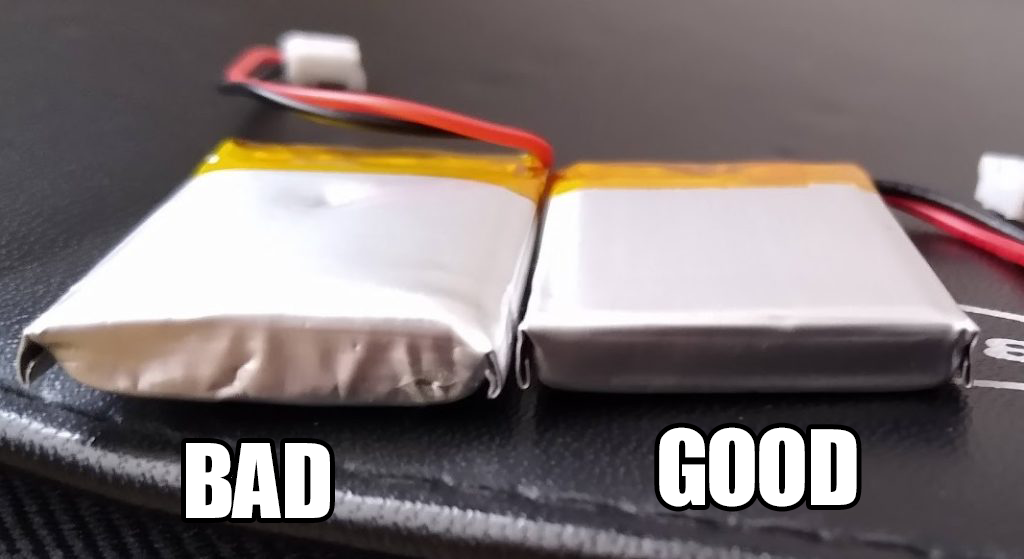
Some users treat mild puffing like a cosmetic issue. It is not. Gas buildup inside a 4S LiPo battery means chemical breakdown is already underway.
A slightly puffy pack today often becomes a risky pack tomorrow. And no amount of careful charging reverses that process.
If the pack shape has changed, the decision should already be leaning toward retirement.
Voltage Sag Tells a Quiet Story
Voltage sag under load is another early indicator. The battery shows a full charge, but performance drops quickly once demand increases.
With a 4S LiPo battery, this often appears as shorter run times or sudden low-voltage warnings even though capacity once felt solid.
Servicing can sometimes confirm whether the issue is temporary imbalance or permanent degradation. But repeated sag usually points in one direction.
Heat Is Feedback, Not Bad Luck
Batteries get warm during use. Excessive heat is different.
If a 4S LiPo battery consistently runs hotter than similar packs under the same conditions, it is under stress. Internal resistance generates heat. Heat accelerates wear. Wear increases resistance.
It is a loop that ends the same way every time.
When Servicing Stops Being Helpful
Professional battery servicing can extend life. Balancing, cycling, and inspection catch problems early. But servicing is not magic.
There comes a point where a 4S LiPo battery no longer responds well to balancing. Cells drift again quickly. Storage voltage does not hold evenly. The charger struggles to complete a normal cycle.
That is the point where continued charging becomes a risk, not a solution.
The False Economy of “One More Cycle”
This is where many users hesitate.
A 4s lipo battery is not cheap. Replacing it feels wasteful, especially if it still sort of works. So people try one more cycle. Then another. Then they start charging faster to save time.
Ironically, this approach costs more in the long run. Damaged equipment. Lost models. Safety incidents. Or replacing multiple packs instead of one.
Why Higher Cell Count Leaves Less Margin
With more cells in series, tolerance shrinks. A single failing cell in a 4s lipo battery affects total voltage more dramatically than in lower cell packs.
That is why conservative retirement matters more here. The system has less room to absorb imbalance or degradation.
What feels cautious at 3S is simply sensible at 4S.
Shared Environments Need Clear Rules
In workshops, clubs, and training spaces, battery retirement decisions are not personal. They are communal safety choices.
A 4s lipo battery that might be acceptable for a careful individual user can become a liability in shared charging environments. Mixed chargers. Different habits. Less consistent monitoring.
Clear retirement criteria protect everyone involved.
Chargers Often See the Problem First
Good chargers are honest.
They show widening cell spreads. Longer balancing times. Error warnings that were not there before. These are not charger faults. They are diagnostics.
If your charger keeps flagging issues with a 4S LiPo battery, listen. It is doing its job.
Emotional Attachment Is Real
This part rarely gets acknowledged.
People get attached to gear. Especially batteries that have been reliable for a long time. A 4S lipo battery that never lets you down feels trustworthy, even as it ages.
But chemistry does not care about loyalty. It responds to physics and time.
Retiring a Battery Is Not Failure
Retiring a battery at the right time is not wasteful. It is responsible.
A 4s lipo battery that leaves service before it becomes dangerous has done its job properly. It powered equipment. It performed as expected. It exited without incident.
That is success, not loss.
A Simple Final Check Before You Decide
Before charging any older pack again, ask a few quiet questions.
Does this 4S Lipo battery balance easily?
Does it stay cool during normal use?
Does it hold voltage predictably?
Does the charger complete cycles without complaint?
If the answers start drifting toward no, it is time.
One Last Thought
Batteries rarely demand retirement loudly. They hint. They hesitate. They resist just a little.
The safest users notice early and act calmly.
Because with a 4s lipo battery from RC Battery, waiting for a dramatic failure is not a test of toughness. It is a gamble.
And batteries always win those.