The Conversation Your Music Has Been Waiting to Have
You’ve tried explaining your song idea to a musician friend. You used every metaphor you could think of—”It’s like if The xx met Fleetwood Mac in a rainy coffee shop”—and watched their expression shift from understanding to polite confusion. Three weeks and $800 later, they sent you a track. It’s professionally made, technically flawless, but it’s not your song. Something essential got lost between your imagination and their interpretation.
This isn’t anyone’s fault. Describing music with words is like describing the ocean to someone who’s never left the desert. You can talk about waves, salt, vastness—but until they experience it, they’ll never truly understand. The gap between musical vision and verbal description has killed more song ideas than lack of talent ever could.
For decades, this communication barrier seemed insurmountable. You either learned to create music yourself (years of training, expensive equipment, steep learning curves) or hired someone to interpret your vision (costly, time-consuming, translation errors inevitable). Both paths required you to accept that your original idea would transform—sometimes beautifully, often disappointingly—through the execution process.
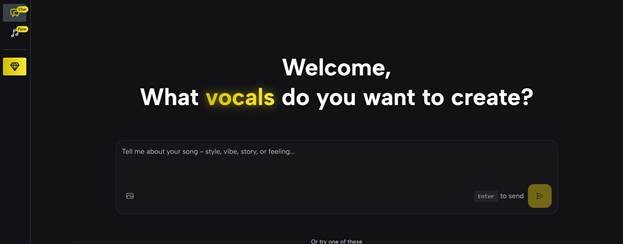
But what if the conversation itself could generate the music? Not issuing commands to a passive tool, but engaging in actual dialogue with an intelligent system that asks clarifying questions, proposes musical solutions, and iterates alongside you until your vision crystallizes into reality? This shift from instruction to collaboration represents the most significant evolution in accessible music creation, and it’s exactly what AI Song Agent technology enables.
Why Traditional Music Creation Keeps Failing Your Ideas
The conventional music creation process operates like a game of telephone played across different languages. Your musical imagination exists as sound, feeling, and emotion. To create it traditionally, you must:
Step One: Translate sound into words – Already problematic. How do you verbally capture the specific texture of a synth pad, the exact emotional quality of a chord progression, or the rhythmic feel that makes a groove work?
Step Two: Hope someone interprets those words correctly – Even skilled musicians interpret descriptions differently. “Melancholic” might mean Radiohead-sad to one person and Billie Eilish-sad to another. “Upbeat” spans everything from polka to punk.
Step Three: Accept their technical execution – Their skill level, stylistic preferences, available equipment, and creative instincts shape the final product as much as your original vision.
Step Four: Provide feedback and iterate – More translation problems, more time, more money, more opportunities for your idea to drift further from its origin.
The Real Cost of the Translation Gap
| Creation Approach | Communication Accuracy | Iteration Speed | Vision Preservation | Cost Per Revision | Creative Control |
| Hire Professional Musician | 40-60% (interpretation varies) | 1-2 weeks per revision | Moderate (filtered through their style) | $200-$500 | Collaborative (shared) |
| Collaborate with Friend | 30-50% (casual communication) | Days to weeks | Low (friendship dynamics complicate feedback) | Free (but relationship cost) | Minimal (don’t want to offend) |
| Learn Production Yourself | 100% (direct execution) | Months to years initially | High (once skilled) | Time investment only | Complete (once competent) |
| Traditional AI Music Tools | 20-40% (rigid prompt interpretation) | Minutes per generation | Very Low (random outputs) | $0-$30/month | Very Limited |
| Song Agent | 60-80% (conversational refinement) | Minutes with real-time adjustment | High (iterative dialogue) | $0-$50/month | High (guided collaboration) |
The table reveals something crucial: traditional methods sacrifice either accuracy, speed, control, or affordability. You’ve never been able to have all four simultaneously—until conversational AI systems changed the equation.
When Music Creation Becomes a Dialogue
I’ll share my first experience with an AI Song Agent system, because it fundamentally shifted how I think about accessible music creation. I needed background music for a short documentary about my grandmother’s immigration story—something that felt nostalgic but hopeful, with cultural instrumentation but modern production.
With traditional AI music generators, I would’ve typed: “Nostalgic hopeful immigration music with cultural instruments” and received… something vaguely related. Maybe usable, probably not quite right, definitely requiring dozens of regenerations with slightly modified prompts.
Instead, the AI Song Agent approach worked differently:
My input: “I need music for a documentary about my grandmother’s immigration from Eastern Europe in the 1950s. It should feel nostalgic but ultimately hopeful.”
System response: “I understand you’re looking for emotionally layered music. A few questions: Should I incorporate traditional Eastern European instruments like accordion or balalaika? What tempo feels right—slow and reflective or moderate with forward momentum? Do you envision this as primarily orchestral, folk-based, or a hybrid approach?”
This back-and-forth continued for maybe five minutes. The system asked about specific scenes, emotional arcs, whether I wanted vocals or instrumental. Then it presented a musical blueprint—proposed structure, instrumentation, key signature, tempo—before generating anything.
When I approved the plan, it created the track. The first version was about 75% there. I said, “The opening feels too somber—can we make it slightly warmer?” It adjusted. “Perfect, but the ending needs more resolution.” It refined again. Total time: about 35 minutes from first message to final track.
For context, I’d spent two weeks searching stock music libraries and found nothing that captured that specific emotional balance. The AI Song Agent approach didn’t just save time—it preserved my creative vision through iterative dialogue rather than forcing me to accept whatever random generation came closest.
What Conversational Music Creation Actually Enables
For Complex Projects: When I tested creating a full podcast music package—intro, outro, transition stings, background tracks—the conversational approach proved invaluable. Instead of generating each element separately and hoping they’d sound cohesive, I could say: “These all need to feel like they belong to the same audio brand. The intro should be mysterious, transitions should be short and subtle, background should be unobtrusive.” The system maintained thematic consistency across all elements because it understood the overarching vision.
For Genre Blending: Traditional tools struggle with hybrid genres because they’re trained on distinct categories. But in conversation, you can explain: “I want the emotional intimacy of folk music but with electronic production and trip-hop beats.” The dialogue allows for nuance that rigid prompts can’t capture.
For Emotional Specificity: There’s a massive difference between “sad music” and “music that feels like bittersweet acceptance after loss.” Conversational systems let you articulate these emotional subtleties, ask for adjustments, and refine until the feeling matches your vision.
For Learning Through Creation: Perhaps most surprisingly, the dialogue itself becomes educational. When the system asks, “Do you want this in a major or minor key?” and you respond, “I’m not sure—what’s the difference in feeling?” it can explain and generate examples. You learn music concepts contextually, through your own creative process.
The Honest Limitations Worth Knowing
If I claimed this technology solves every music creation challenge, you’d rightfully be skeptical. So let’s address what it can’t do—yet.
The Articulation Requirement: You still need to describe your vision, which requires some verbal clarity. If you can’t articulate what you want beyond “something good,” even conversational AI will struggle. The system is sophisticated, but it’s not telepathic. In my experience, spending five minutes thinking through your vision before starting the conversation dramatically improves results.
The Iteration Reality: While faster than traditional methods, you’ll rarely nail it on the first generation. My projects typically require 3-7 iterations before I’m satisfied. Sometimes the system misinterprets a request, or I realize my own description wasn’t quite right. The conversation helps, but it’s still a process, not instant magic.
The Originality Spectrum: Because these systems learn from existing music, generated tracks can sometimes feel derivative—competent executions of genre conventions rather than groundbreaking innovations. For background music, podcast intros, or functional audio, this works perfectly. For artistic statements that push musical boundaries, human creativity still leads.
The Technical Complexity Ceiling: Highly complex arrangements with intricate orchestration, unconventional time signatures, or avant-garde structures can challenge even advanced AI systems. The technology excels at well-established musical patterns but can struggle with experimental approaches that break conventional rules.
The Vocal Quality Variable: In my testing, instrumental tracks consistently sound professional. Vocal tracks vary more widely—some are impressively natural, others have that subtle artificial quality. If vocals are central to your vision, expect more iteration and potentially some compromise.
Choosing the Right Approach for Your Musical Vision
The question isn’t whether AI Song Agent technology is “better” than human musicians—that’s a false comparison. The relevant question is: what does your specific project need, and what resources do you actually have?
Conversational AI music creation makes sense when:
- You have clear vision but lack technical execution skills
- Budget constraints make professional collaboration impractical
- You’re creating functional music (backgrounds, intros, soundtracks) rather than artistic statements
- Timeline demands rapid iteration and refinement
- You value creative control over the final product
Traditional collaboration remains superior when:
- Your project requires genuinely innovative musical approaches
- You have budget and timeline flexibility
- The human element—imperfection, spontaneity, artistic interpretation—is central to your vision
- You’re seeking to learn from and build relationships with other musicians
For most people with musical ideas trapped in their imagination, the honest comparison isn’t “AI versus professional musicians”—it’s “AI-enabled creation versus those ideas never becoming real songs at all.”
Your Musical Ideas Deserve Better Than Silence
What strikes me most about conversational music creation isn’t the technological sophistication—it’s the creative permission it grants. For the first time, people who hear music in their minds but lack traditional execution skills have a genuine dialogue partner in the creation process.
That song idea you’ve been carrying for months? You can finally have the conversation that brings it to life. Not through rigid commands to a passive tool, but through iterative dialogue that refines your vision into reality. The technology won’t replace the profound artistry of skilled human musicians, but it does eliminate the silence that’s surrounded your musical imagination.
Your ideas have been waiting for this conversation. Maybe it’s time to start talking.