SERP Feature Optimization: Building Authority Beyond Rankings
This post is sponsored by Semrush. When you purchase through links in this article, we may earn an affiliate commission from Semrush.
How to Measure SEO Success When Searchers Aren’t Clicking
Your rankings are strong. Your traffic is falling.
If that sounds familiar, you’re not alone, and it’s not a coincidence.
Search has entered an answer-first era. AI Overviews, featured snippets, People Also Ask boxes, and LLM-generated responses now deliver answers directly in the SERP or inside AI platforms. Users increasingly get what they need without ever clicking through to a website. That means traditional SEO success metrics, rankings, clicks, sessions—no longer tell the full story.
The new competitive advantage is visibility, not just traffic.
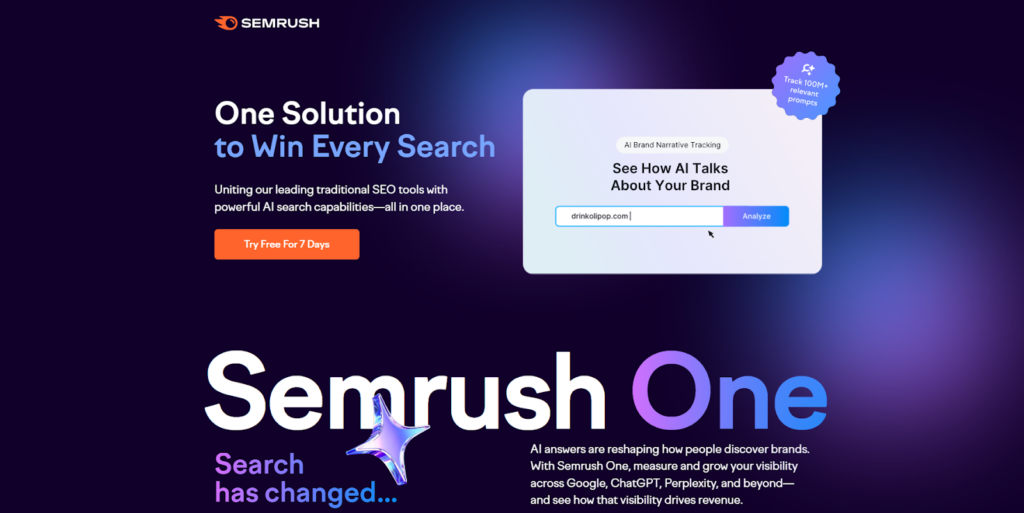
To compete in this environment, marketers need a way to measure brand presence across both search engines and AI-driven discovery, not just what gets clicked. Semrush One Solution addresses this shift by unifying SEO performance and AI visibility into a single measurement framework, helping teams understand where their brand appears, how it’s represented, and how visibility evolves even when clicks disappear.
Rankings Don’t Guarantee Traffic Anymore
For years, SEO success followed a simple logic: rank higher, get more clicks. That relationship has broken down.
Today, a page can rank in the top three and still lose traffic because:
- AI Overviews summarize answers directly in search
- Featured snippets resolve intent above the fold
- SERP features crowd out organic listings
- LLMs reference brands without sending users to websites
As Glenn Gabe noted, even the sources shown in AI Overviews can change when users expand the view, making visibility inconsistent and difficult to track. Meanwhile, Gaetano DiNardi points out that many conversions influenced by AI answers are zero-click, leaving traditional analytics blind to real impact.
The result? Teams celebrate rankings while pipelines quietly soften.
The Real Problem: Measurement Gaps in Answer-First Search
Most SEO tools were built for a click-driven web. They struggle to answer modern questions like:
- Where does my brand appear in AI Overviews?
- Am I cited in LLM-generated answers?
- Which competitors dominate featured snippets and PAAs?
- How much visibility am I earning without clicks?
This is especially challenging because URLs can surface differently across AI features, and traditional rank trackers fail to capture what users actually see.
As Aleyda Solis has highlighted, zero-click SERPs are heavily influenced by SERP features and Google-owned properties, reshaping who gets attention, and who doesn’t.
If you can’t measure visibility, you can’t optimize it.
Visibility Is the New Currency of Search
Zero-click search doesn’t mean zero results. It redefines success.
Modern SEO performance should answer three questions:
- Are we visible where answers are generated?
- Are we perceived as authoritative sources?
- Are we influencing decisions, even without clicks?
This is where visibility-first metrics matter: impressions in AI features, citations, brand mentions, snippet ownership, and SERP feature coverage. These signals shape awareness, trust, and downstream conversions, even if analytics never show a session.
Good teams optimize for clicks.
Great teams optimize for answer ownership.
Measuring Answer-First Visibility with Semrush Toolkits
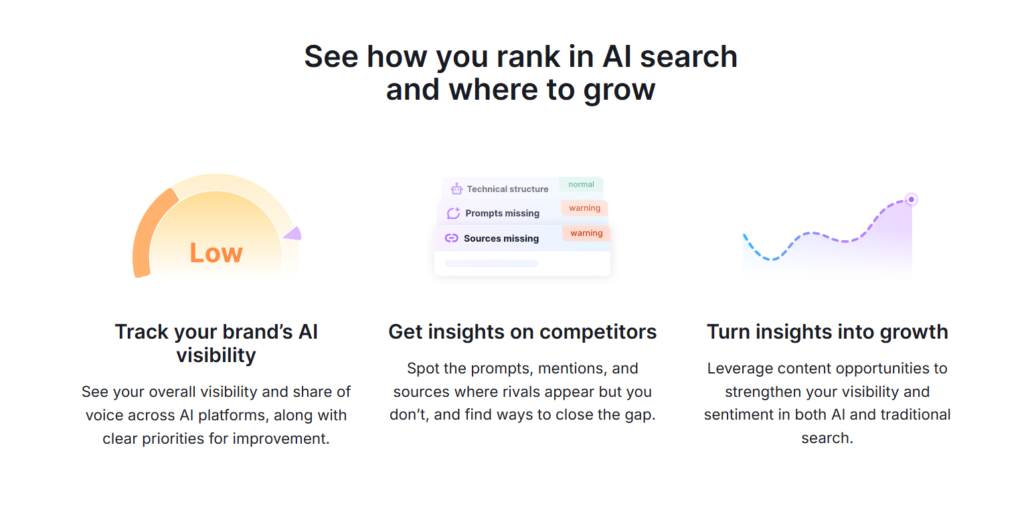
To adapt, practitioners need unified measurement across traditional and AI-driven search. This is where Semrush One Solution plays a central role.
Semrush One combines the SEO Toolkit and AI Visibility Toolkit to provide a holistic view of performance across rankings, SERP features, and AI answers.
Key capabilities include:
Position and Prompt Tracking
Track keyword positions alongside appearances in SERP features and AI-generated answers. This allows teams to see where their content is cited, summarized, or referenced, beyond blue links.
Visibility Overview
Measure brand citations, mentions, and overall visibility across AI platforms and SERP features. Instead of asking “How many clicks did we get?”, teams can ask, “How often are we seen where answers happen?”
On Page SEO Checker
Reverse-engineer competitor strategies for featured snippets and answer boxes. The tool provides data-driven guidance to structure content for snippet eligibility and SERP feature ownership.
Together, these capabilities transform zero-click visibility from a vague concept into a trackable performance layer.
Content Strategy for Answer-First Search
Measurement is only half the equation. Winning visibility requires content designed for answer completeness.
This is where the Semrush Content Toolkit supports execution.
Using tools like the SEO Brief Generator, teams can build content frameworks optimized for:
- Direct answers to high-intent questions
- Clear structure for AI summarization
- Comprehensive coverage aligned with SERP features
- Language and formats that support citations
Instead of writing for rankings alone, content is engineered to earn visibility wherever answers are generated, from AI Overviews to LLM responses.
SERP Features Are a High-Leverage Investment
Owning featured snippets, PAAs, and carousels compounds brand exposure.
Even when users don’t click, repeated visibility builds:
- Brand recall
- Perceived authority
- Trust at decision time
In an answer-first ecosystem, these impressions often influence conversions that happen later, through branded search, direct traffic, or offline decisions.
Rankings still matter. But visibility across all answer surfaces matters more.
Final Thoughts
Search isn’t broken, it’s evolving. The teams that win won’t focus on clicks alone; they’ll track presence, authority, and influence across every surface where answers are shown.
That means:
- Tracking SERP feature performance alongside traditional rankings
- Measuring AI visibility as a core part of SEO reporting
- Structuring content to own answers, not just positions
With Semrush One Solution and the Content Toolkit, visibility in an answer-first search era becomes measurable, actionable, and scalable. Transforming zero-click moments into real, lasting brand value.