How to Prepare Mentally and Physically for Yoga Teacher Training
Do you want to take a revolutionary ride towards becoming more committed to yoga and enhancing your teaching capacity? Whether you are a seasoned practitioner or have only recently started to venture into the mat, one of the most important things that happen in the course of personal and professional development is the preparation to become a yoga teacher. It is not only how to do poses, but also how to develop a good mental background and improve physical stamina. In this blog post, we are going to look into some of the strategies that are necessary to enable you to prepare both mentally and physically to this thrilling adventure. Since it is possible to create a steady practice habit to mindfulness techniques, prepare to discover your inner guru and enter the world of teaching as a confident expert!
Introduction: The benefits of yoga teacher training and the importance of mental and physical preparation.
Yoga Teacher Training is not only a lifelong learning process but changes them as well. It is a chance to learn more about yoga, develop personal experience, and meet people with the same interests. But such an adventure will not do without enthusiasm; it demands to be prepared with both mind and body.
To go into this world, is to commit time, efforts, and finances. The investment may be big but the payoff can be huge both in the personal and professional front. The right attitude towards your training will precondition the success, and a fit body will guarantee that you are able to meet the requirements that the teaching profession may impose.
And a well-planned schedule and setting of intentions will not only ensure you do well in your training but also come out a competent teacher eager to spread the gift of yoga to other people. We will discuss the way to be ready both mentally and physically and enjoy this fantastic experience!
Understanding the Commitment: Discussing the time, energy, and financial commitment required for yoga teacher training.
Becoming a yoga teacher is a big undertaking. It does not only involve going to classes, it involves time, energy, and money.
Usually the programs may take weeks up to months. You will have to spend time per day on a lecture, practicing, and studying. This commitment improves not only your talents but also your knowledge of the philosophy of yoga.
Be ready to have long days of physically demanding work, as well as mentally challenging work. The path requires concentration and endurance as you immerse yourself into poses and lessons.
Costs are diverse, however, financially, depending on the school or the studio. The cost of tuition fees can soon be very high considering costs of materials or accommodation in the event you are training outside your country.
Knowledge of these commitments will allow you to think clearly and will make you ready to approach your training. This training preconditions the development in aspects which go far beyond the mat.
Preparing Your Mind: Tips for cultivating a positive mindset, setting intentions, and managing expectations before starting training.
Cultivating a positive mindset is essential as you embark on your yoga teacher training in Rishikesh. Start by embracing the idea that growth often comes from challenges. This will help shift your perspective on what lies ahead.
Setting clear intentions can guide your practice and learning throughout the course. Take time to reflect on why you want to become a yoga teacher. Write down these intentions in a journal, revisiting them regularly for focus.
Managing expectations is equally important. Recognize that everyone’s path is unique; comparisons can lead to unnecessary pressure. Allow yourself grace as you learn new techniques and philosophies.
Incorporate mindfulness practices into your daily routine, such as meditation or deep breathing exercises. These tools can help center your mind and enhance mental clarity while preparing for the intensive experience of training ahead.

Strengthening Your Body: Exercises and practices to help strengthen and prepare your body for the physical demands of teaching yoga.
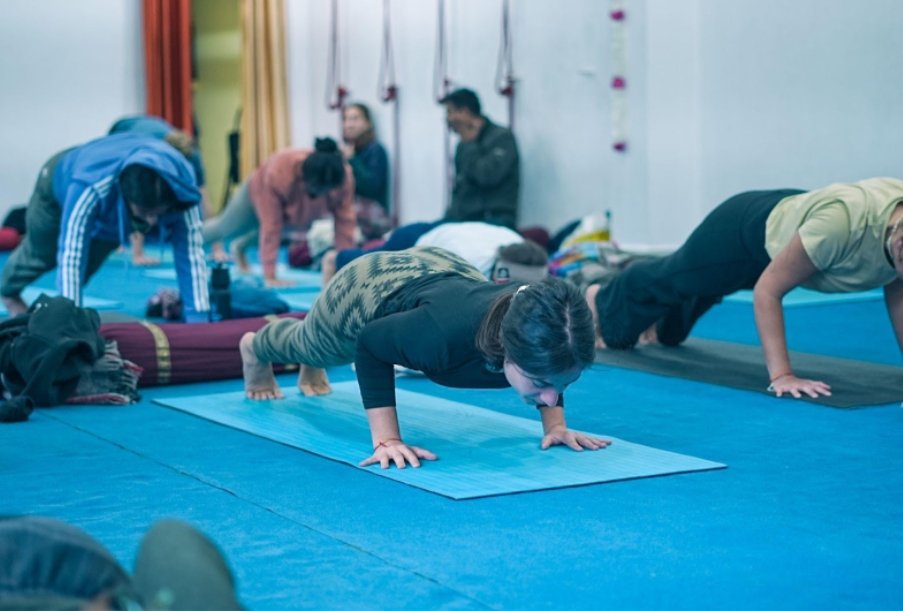
Being physically able to teach yoga requires you to be prepared by training on strength and flexibility. Use a combination of exercises that involve bodyweight such as push-ups, squats and planks. The movements utilize several groups of muscles and form a strong base.
Resistance training using bands or weight should be considered. This will improve muscular stamina that is significant during extended classes.
Yoga per se can be a very useful preparation device. Pose: This concentrates on establishing core stability, including Boat Pose or variations of Plank. They are strengthening and also beneficial in enhancing balance.
Also, mobility work should be added to your program. The use of stretch and foam rolling can help decrease tension and enhance the range of movement.
Lastly, but not least, the consistency is the most important; practice every day instead of practicing regularly to achieve major improvements in the course of time.
Nourishing Your Body: Nutrition tips to support your body during intense physical training.
It is important to prepare your body with the requirements of the yoga teacher training, which is pre-eminently affected by nutrition. You require energy and whatever you consume has a direct effect on your performance.
Specialize in whole foods which power your body. Vegetables and fruits contain important vitamins and minerals. They are beneficial in recovery and well-being.
Add lean proteins to your diet. Chicken, fish, legumes or tofu can assist in muscle healing after those exhaustive practice sessions.
Don’t forget healthy fats! Avocados, nuts and seeds contribute to brain activity and will help you stay fuller longer.
Keep the fluids up during the day. Water plays such a crucial role in ensuring the level of energy in the body when the body is engaged in strenuous activities.
Think about preparing meals in advance so that you have fueled yourself properly on a day-to-day basis. This will help to save time with nutrition being at the center of your training experience.
Pay attention to your body needs; your body knows what is good to make you shine in this transition time.
Developing Self-Care Practices: The importance of self-care in a demanding training program and suggestions for incorporating self-care into your routine.
Self-care is crucial when diving into a challenging 200 Hour yoga teacher training In Rishikesh. It acts as your anchor, keeping you grounded amidst the intensity of physical and mental demands.
Start with setting aside some time every day. This may be as simple as taking a tea cup in quietness or having a walk in the natural world. These little pauses are something that should be prioritized in order to renew your spirits.
Bring the aspect of mindfulness into your life. Just five minutes of meditation daily can improve sanity and emotional strength.
Listen to your body’s needs. When you are tired give yourself time to rest rather than work when you are tired.
Find artistic expressive sources such as journaling or painting to take away frustrations and pressure. These practices are good in developing the mind and soul and creating self awareness.
Finally, get access to other trainees or friends who are on the journey. Sharing experiences and supporting each other will help both people improve greatly and community support is a powerful motivator.
Seeking Support: How to build a support network and lean on others during challenging
When you are on your way to the world of yoga teacher training, keep in mind that support may be everything. It is necessary to develop a strong support system to make it through the difficulties on your way.
Begin by making contact with other trainees. There is an exchange of tips, information sharing, and support among each other in the difficult times. Having other people who empathize with you in your predicament offer support and encouragement when you need it the most.
Do not also be shy in contacting your instructors. They must have experienced the same difficulties in their experiences, and they can give the same priceless advice and support. They can answer any doubts or fears that you may have during your training.
You can also consider getting help of friends or family members outside of your yoga circle. Being able to share what you are going through enables those people who love you to help know more about your devotion as well as offer emotional support during this change-of-direction process.
The use of social media or local gatherings also may help discover like-minded people who share the same purpose or interest in teaching yoga. Interaction with these communities is not only career building as it broadens your contacts, but it also refines your learning experience by getting different opinions.
Finally, and lastly, do not underscore the strength of self-compassion at this moment. Remember that things will be good one day and bad the next, being soft on yourself is a way of being resilient enough to remember that you are not only working on yourself but also on the overall project.
By adopting a positive atmosphere, you will be able to learn more about yourself and your body and mind, as you enter one stage of your teacher training with confidence.