How Precision Manufacturing Cuts Product Development Time by 40%: A Guide to Rapid Prototyping and Instant Quotes
Introduction
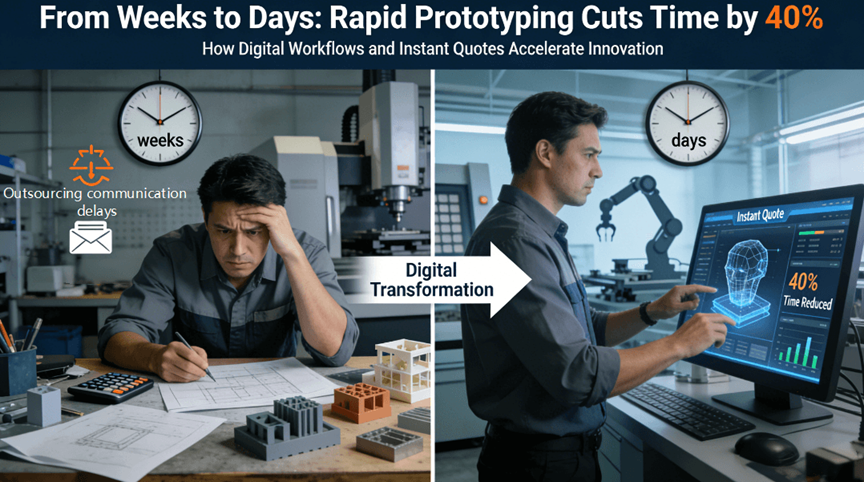
In today’s competitive market, product development teams face significant pressure to innovate faster, yet they are often hampered by prototype cycles, cost overruns, and communication gaps. These inefficiencies, rooted in outdated methods like outsourced manufacturing with delayed quotes and slow iterations, directly lead to missed windows of opportunity. The core issue is a reliance on non-transparent pricing models and a lack of integrated, flexible technological solutions, preventing rapid design validation.
This article demonstrates how modern rapid prototyping services, leveraging digital workflows and instant quoting systems, can slash development time by up to 40% while ensuring cost control and quality. The following sections will provide a detailed guide to implementing these strategies effectively.
What Is Rapid Prototyping and How Does It Work in Modern Manufacturing?
Rapid prototyping is a digital fabrication process that quickly creates physical models from CAD data, enabling iterative design validation. It encompasses technologies like 3D printing and CNC machining, which transform digital designs into tangible parts within days rather than weeks. This approach is pivotal in modern manufacturing for accelerating innovation and reducing time-to-market.
1. Defining Rapid Prototyping in the Digital Age
Rapid prototyping refers to the accelerated production of scale models using additive or subtractive methods. Unlike traditional manufacturing, it emphasizes speed and flexibility, allowing engineers to test form, fit, and function early in the development cycle. By leveraging digital tools, teams can identify design flaws before mass production, saving resources and mitigating risks. This proactive approach is fundamental to understanding how rapid prototyping works in a contemporary context.
2. Key Technologies and Their Applications
Critical technologies include 3D printing for complex geometries and CNC machining for high-precision parts. For instance, 3D printing builds layers from materials like polymers or metals, while CNC machining subtracts material from a solid block. The selection of materials, informed by authoritative data on material properties, directly impacts prototype performance and durability. By utilizing digital workflows, businesses can swiftly obtain a custom quote for rapid prototyping, significantly accelerating the decision-making process and project initiation.
3. The Digital Workflow from CAD to Physical Part
The process begins with a CAD file upload, followed by automated design analysis and toolpath generation. Digital threads enable seamless data transfer, reducing manual errors and speeding up production. This end-to-end digital fabrication workflow minimizes human intervention, enabling same-day prototyping in some cases and ensuring that the entire process from design to physical part is efficient and reliable.
How Can Rapid Prototyping Accelerate the Product Development Cycle?
Rapid prototyping compresses development timelines by enabling rapid iterations, functional testing, and reduced rework. It directly enhances operational efficiency and supply chain agility, as seen in cases where companies have cut testing cycles from weeks to days.
- Iterative Design and Rapid Validation: By producing multiple prototypes quickly, teams can test concepts and incorporate feedback in real-time. This iterative loop minimizes design errors, avoiding costly changes later in the product development cycle. For example, a drone manufacturer might refine aerodynamics through several prototype cycles in one week, versus one cycle per month with traditional methods.
- Reducing Rework and Enhancing Collaboration: Early prototyping catches issues like assembly conflicts or material incompatibilities, slashing rework costs. Digital prototypes facilitate cross-functional reviews, aligning engineering, marketing, and production teams. This collaboration minimizes misunderstandings and speeds up time-to-market, directly contributing to greater operational efficiency.
- Case Study: Efficiency Gains in Practice: A medical device company developed a surgical tool prototype in five days, down from three weeks, by using rapid prototyping. This agile approach allowed them to launch six months earlier, capturing market share and demonstrating how prototyping enhances supply chain agility by enabling a faster response to design changes and market demands.
What Steps Ensure an Accurate and Fast Custom Quote for Prototyping Projects?
An efficient quoting process is crucial for project planning. It hinges on digital file submission, design for manufacturability (DFM) analysis, and parametric cost models, all supported by standardized systems like ISO 9001 for transparency.
1. File Submission and Automated Analysis
Clients upload CAD files (e.g., STEP, STL) to online portals, where AI tools instantly assess geometry and material requirements. This automation eliminates manual quotes, delivering a fast prototyping quote within hours. The accuracy of these quotes is ensured through algorithm-driven checks for manufacturability and potential issues.
2. DFM Analysis and Cost Parameterization
A thorough DFM review identifies potential production challenges, such as unsuitable wall thickness or tolerance issues, suggesting optimizations before machining begins. Cost models factor in material, machine time, and labor, providing transparent pricing. Adherence to international standards guarantees that quotes reflect reliable quality benchmarks, which is essential when considering how to get a prototyping quote that is both accurate and actionable.
3. The Role of Standardization in Quote Reliability
Standards like ISO 9001 provide a framework for consistent processes, which directly contributes to quote reliability. By following these standardized procedures, reputable providers ensure that every custom rapid prototyping quote is reproducible and fair, building trust and streamlining the procurement process for clients.
What Key Capabilities Should a Rapid Prototyping Service Provider Offer?
Selecting the right partner is critical for success. Key criteria include technical range, relevant certifications, and a robust quality management system to ensure reliability and quality.
1. Technical Expertise and Equipment Capabilities
A top-tier rapid prototyping service provider should offer a wide range of technologies, such as multi-axis CNC and various 3D printing processes, to handle diverse materials and complex geometries. This technical versatility is essential for achieving the high precision required in precision manufacturing and for delivering cost-effective prototyping solutions.
2. Certification and Quality Assurance Frameworks
Certifications such as ISO 9001 quality management system certification and AS9100D aerospace certification demonstrate a supplier’s commitment to rigorous standards. Taking a manufacturing company as an example, these certifications ensure controlled production processes and stable product quality, which is crucial for high-risk industries. These certifications serve as a solid guarantee of supplier reliability.
3. Support Services and DFM Expertise
Beyond machinery, a provider should offer expert design for manufacturability (DFM) consultations to optimize designs for production. This collaborative approach reduces the number of iterations required, saving time and costs, and transforms the relationship from a simple transaction into a strategic partnership focused on project success.
How Do Online Quoting Systems Enhance Efficiency and Accuracy in Prototyping?
Online quoting systems use AI-driven analysis and real-time data integration to minimize errors and dramatically speed up the quotation process, supporting broader tech innovation initiatives.
- AI-Powered Design Assessment: Advanced algorithms automatically evaluate CAD files for manufacturability, flagging potential issues like thin walls or areas prone to stress concentration. This automated scrutiny provides instant DFM feedback, enhancing the accuracy of the online rapid prototyping quote and reducing the risk of errors that can lead to cost overruns.
- Real-Time Data Integration for Transparent Pricing: These systems integrate live data on material costs and machine availability, ensuring that quotes are based on current market conditions. This transparency allows for a clear custom quote process, where clients see detailed breakdowns, fostering trust and enabling informed budgeting decisions.
- User Experience and Accessibility: Intuitive online platforms allow for seamless file uploads and provide clear instructions, making the process of obtaining a quote accessible even for those without deep technical expertise. This ease of use accelerates the initial engagement and supports the tech innovation goal of making advanced manufacturing more accessible.
Why Is Rapid Prototyping Critical for Achieving Supply Chain Agility?
Rapid prototyping strengthens supply chains by enabling on-demand production, reducing inventory risks, and allowing companies to respond quickly to market shifts or design changes.
1. Enabling On-Demand and Localized Production
By facilitating small-batch production quickly and locally, rapid prototyping reduces reliance on distant suppliers and long lead times. This just-in-time approach aligns with lean manufacturing principles, cutting waste and minimizing the capital tied up in inventory, which is a cornerstone of supply chain agility.
2. Mitigating Disruptions Through Design Flexibility
During material shortages or design changes, rapid prototyping allows for swift adaptation without the need for expensive tooling changes. This operational resilience helps maintain development momentum even in volatile conditions, protecting the product development cycle from significant delays.
3. Supporting Sustainable Business Practices
By reducing waste through targeted production and enabling right-first-time manufacturing, rapid prototyping contributes to more sustainable operations. This not only supports environmental goals but also leads to cost-effective prototyping by minimizing material scrap and energy use.
Conclusion
In conclusion, rapid prototyping services are a transformative force in modern product development. By integrating digital technologies, transparent quoting, and rigorous quality controls, they enable businesses to achieve significant gains in efficiency, potentially cutting development time by 40%. This systematic approach provides a clear path to overcoming traditional bottlenecks, ensuring cost control, and securing a competitive advantage in fast-paced markets.
FAQs
Q1: What is the typical lead time for a rapid prototyping project?
A: Lead times vary by complexity but can be as short as 1-3 days with advanced providers. Factors like design review and material availability influence timing, but automated systems ensure speed without compromising quality.
Q2: How does rapid prototyping compare to traditional manufacturing in cost?
A: It reduces costs by eliminating tooling and enabling small batches. Traditional methods incur high upfront expenses, while prototyping offers pay-per-part models, ideal for iterative testing and risk mitigation.
Q3: Can rapid prototyping handle high-precision requirements?
A: Yes, technologies like CNC machining achieve tolerances up to ±0.005 mm. Providers with relevant certifications ensure that prototypes for medical and aerospace applications meet stringent standards for accuracy and safety.
Q4: What file formats are needed for an online quote?
A: Common formats include STEP, STL, and IGES. Submitting detailed CAD files with material specifications allows AI-based systems to generate accurate quotes within hours, streamlining the process.
Q5: How do you ensure quality in rapid prototyping?
A: Quality is maintained through in-process inspections, CMM measuring, and adherence to international standards. This systematic approach guarantees that prototypes match design specifications consistently.
Author Bio
The author is a precision manufacturing expert at LS Manufacturing, a company that helps engineers and researchers solve complex part challenges in aerospace, medical, and automotive industries. With certifications such as IATF 16949 and AS9100D, the team ensures high-quality solutions through advanced technologies. For more insights, contact them today for a free, no-obligation project review and DFM analysis to bring your concepts to life efficiently.