How CNC milling can save 40% on costs and improve accuracy
Introduction
The manufacturing sector universally grapples with significant challenges such as exorbitant CNC machining milling costs, extended production timelines, and inconsistent part precision. These issues frequently lead to project budget overruns and operational inefficiencies. The root cause lies in the reliance on outdated milling equipment and non-standardized methodologies, which contribute to substantial material waste and unpredictable quality, failing to meet the stringent demands of contemporary applications.
This article proposes a solution through the adoption of advanced CNC milling technologies, strategic material optimization, and the integration of robust Precision Manufacturing Solutions. The following sections will provide a detailed analysis of key strategies to facilitate a successful and efficient transition for modern manufacturing operations.
How to reduce costs by 40% with CNC milling technology?
Achieving a 40% reduction in milling costs is feasible through a combination of technological upgrades and process re-engineering. The adoption of multi-axis CNC machines is a primary driver, as they enable the completion of complex parts in a single setup, drastically reducing machining time, manual handling, and associated labor costs. For example, a single 5-axis machine can perform operations that would otherwise require multiple setups on a 3-axis machine, minimizing cumulative errors and accelerating throughput. Furthermore, process optimization plays a critical role.
By implementing advanced software for toolpath optimization, manufacturers can significantly reduce cycle times and tool wear. Additionally, nesting software maximizes material utilization from each raw stock sheet, directly cutting down on the cost of CNC milling machine operations by minimizing scrap. Real-world case studies demonstrate that such integrated approaches can lead to a 25-30% reduction in material waste and a 15% decrease in energy consumption, collectively contributing to the overall cost savings. Standards established by organizations like NIST provide a benchmark for measuring these efficiency gains, validating that technological innovation is a direct and powerful lever for cost control in precision manufacturing.
What are the key factors to consider when selecting CNC milling services?
Selecting an appropriate CNC milling service provider is critical to project success. A thorough evaluation based on several key criteria ensures reliability, quality, and value.
Proximity and Logistics
The geographical location of a service provider, often a factor in searches for CNC milling near me, offers tangible benefits. Local suppliers can facilitate faster shipping, reduce logistics costs, and enable better communication, including potential site visits. This is particularly advantageous for iterative processes like prototyping, where quick turnarounds are essential.
Technical Capabilities and Credentials
A provider’s technical prowess is paramount. When evaluating a CNC milling machining service, it is essential to review their equipment portfolio for modern, multi-axis machines and their adherence to international quality standards like ISO 9001. The integration of rapid prototyping Technology is a strong indicator of a provider’s ability to accelerate the initial design and validation phases. For a deeper understanding of machining capabilities, a resource such as the CNC Machining Milling Guide can be invaluable. Furthermore, guidelines from authoritative bodies like ASME underscore the importance of certified quality management systems in ensuring part consistency and reliability.
Communication and Project Management
Effective collaboration is built on clear communication and structured project management.
l Design Feedback and Support
A superior service provider offers constructive feedback on design for manufacturability (DFM), helping to optimize parts for cost-effective production without compromising function.
l Scalability and Flexibility
The ability to scale production from a single prototype to high-volume runs ensures a seamless transition through different project stages, preventing the need to source new suppliers and maintaining quality continuity.
How does precision manufacturing solution improve part quality?
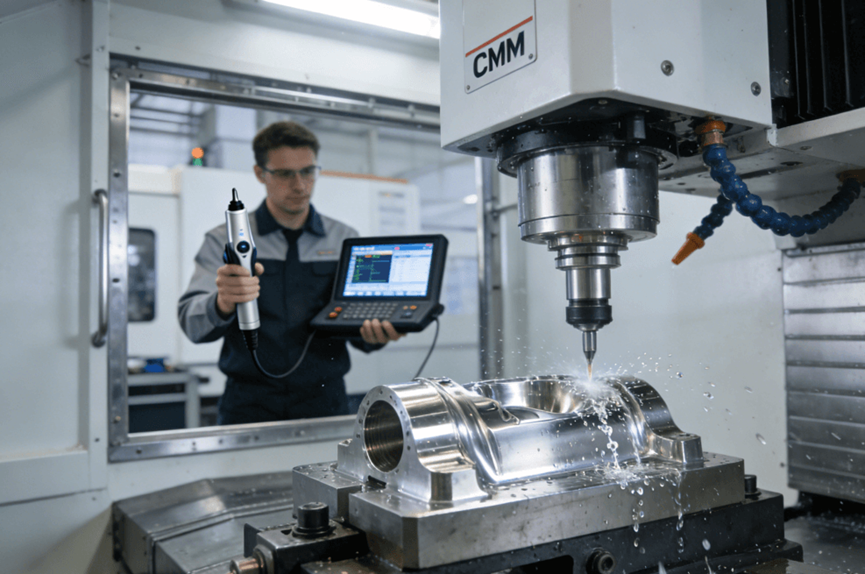
Precision Manufacturing Solutions elevate part quality to exceptional levels through uncompromising standards and systematic controls. The foundation lies in maintaining exceptionally tight tolerances, often within ±0.005mm, which is crucial for components in aerospace, medical devices, and automotive applications. This level of accuracy is achieved not only by advanced machinery but also through rigorous quality control protocols, including the use of Coordinate Measuring Machines (CMM) for meticulous verification. Material innovation further enhances quality; the use of high-performance alloys and engineering-grade plastics ensures superior durability, thermal stability, and corrosion resistance.
The certification framework employed by JS Precision, including standards like AS9100D for aerospace, instills confidence by ensuring that every step of the manufacturing process, from material sourcing to final inspection, adheres to the highest industry benchmarks. This holistic approach guarantees that every batch of CNC milling machining parts meets exact specifications, significantly reducing failure rates and enhancing the longevity of the final product in custom parts development.
How does rapid prototyping technology accelerate product development cycle?
Rapid Prototyping Technology dramatically compresses product development cycles by enabling swift transition from digital designs to functional physical models. When integrated with CNC milling, this technology allows engineers to test form, fit, and function in real-world conditions within days instead of weeks. This rapid iteration loop is invaluable for identifying design flaws, assessing ergonomics, and conducting market testing early in the development process, thereby avoiding costly modifications during full-scale production.
The selection of appropriate CNC milling bits is a critical factor within this process; for instance, using specialized carbide bits for hard metals ensures clean cuts and dimensional accuracy, while diamond-coated tools are ideal for abrasive composites. Data from industry applications shows that this integrated approach can reduce the time from concept approval to production-ready design by up to 60%. These CNC Machining Innovations in prototyping not only speed up time-to-market but also substantially de-risk projects by validating designs before major capital investment.
What are the common challenges in custom part development and how to deal with them?
Custom Parts Development often presents challenges such as balancing complex designs with cost-effectiveness and ensuring manufacturability. Addressing these requires strategic planning and expert collaboration.
Implementing Design for Manufacturability (DFM)
Proactive DFM analysis is the most effective strategy. By collaborating with manufacturing experts during the design phase, engineers can simplify geometries, select standard tolerances, and choose readily available materials, which collectively streamline production and reduce costs. This upfront optimization can mitigate issues related to the CNC milling machine price and operational expenses.
Strategic Cost and Risk Management
Managing the financial aspect is crucial for project viability.
l Phased Development Approach
Adopting a phased approach, starting with a small batch of prototypes before committing to full-scale production, allows for real-world testing and cost verification without significant initial outlay.
l Value Engineering
This involves analyzing the part’s function to identify potential alternative materials or processes that achieve the same performance at a lower cost. For professional support in navigating these strategies, a specialized cnc milling machining service can provide tailored solutions. These Precision Manufacturing Solutions ensure that customization does not come at the expense of profitability or reliability.
Leveraging Advanced Prototyping
Utilizing high-fidelity prototypes created through CNC milling or additive manufacturing provides a tangible basis for validation, ensuring that the custom part will meet all functional requirements before mass production begins.
Conclusion
In summary, the strategic application of advanced CNC milling technologies presents a viable path for the manufacturing industry to overcome prevailing challenges of high costs and variable quality. By embracing equipment modernization, process optimization, and precision manufacturing principles, businesses can achieve a sustainable competitive advantage. To explore how these solutions can benefit your specific operations, it is recommended to immediately contact a professional service provider for a customized quotation to optimize your upcoming project.
Author Profile
The author is a specialist in the precision manufacturing sector with a decade of experience, focusing on the application of CNC technology and the optimization of manufacturing efficiency.
FAQ Section
Q1: What is CNC milling?
A: CNC milling is a computer-controlled subtractive manufacturing process that employs rotating multi-point cutting tools to precisely remove material from a workpiece, creating custom-designed parts from metals, plastics, and composites.
Q2: What is the price range of a CNC milling machine?
A: The price varies significantly based on capability; entry-level 3-axis machines start around 50,000,whileadvanced5−axisindustrialsystemscanexceed500,000, dependent on size, precision, and automation features.
Q3: How to find a reliable local CNC milling service?
A: Identify reliable local services by verifying industry certifications like ISO 9001, reviewing their equipment list for modern machinery, and assessing customer testimonials, with a preference for providers offering rapid prototyping support.
Q4: What types of CNC milling bits are available?
A: Common types include flat-end mills for sharp contours, ball-end mills for 3D contours, and tapered end mills for detailed engraving, selected based on material hardness and the specific machining operation.
Q5: How does precision manufacturing ensure part quality?
A: Quality is assured through rigorous quality control systems involving advanced metrology equipment like CMMs and adherence to international certifications like IATF 16949, ensuring every part meets specified tolerance requirements.