Fragmented Supply Chain? The Case for End-to-End 3PL Logistics in Canada
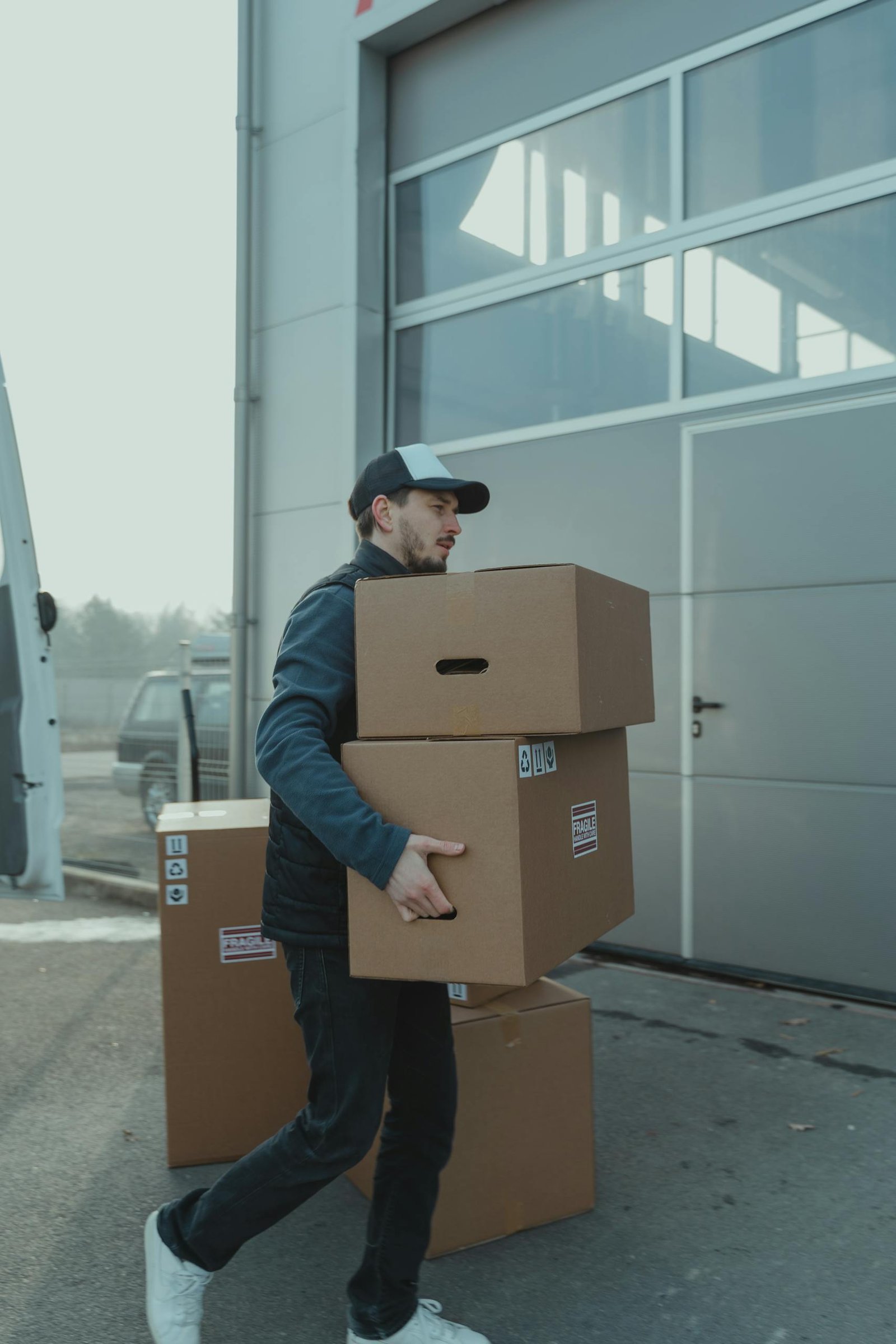
It’s 8:30 AM on a Tuesday. Your inbox is already flooded. The carrier says the truck is waiting at the dock, but the warehouse manager claims the order isn’t picked yet because the co-packer didn’t finish the display units yesterday. Everyone is pointing fingers, and meanwhile, your retail buyer is emailing you for an ETA that you can’t provide with any certainty.
If this scenario sounds familiar, you aren’t just having a run of bad luck. You are dealing with the systemic friction of a fragmented supply chain. For many Supply Chain Directors, the day is spent “firefighting” issues caused by disconnects between vendors who simply aren’t talking to one another.
Managing separate vendors for warehousing, transportation, and fulfillment often creates data silos that slow down your speed-to-market. By partnering with a single source, you can consolidate these moving parts into a single, streamlined workflow.
Consolidating your Canadian logistics operations under one roof isn’t just a matter of convenience; it has become a strategic necessity. To maintain visibility, ensure strict compliance, and protect your margins, moving away from a patchwork of providers toward an end-to-end solution is the only way to scale effectively.
Key Takeaways
- Fragmentation Costs Money: Relying on multiple vendors creates operational “blind spots,” leading to lost inventory, communication breakdowns, and significant administrative bloat.
- The Power of Asset-Based: Unlike freight brokers, asset-based providers own their trucks and warehouses, offering guaranteed capacity and accountability—critical for Canadian operations.
- Compliance is Key: An integrated partner ensures an unbroken chain of custody, which is essential for regulated goods in the food and pharmaceutical sectors.
- Tangible ROI: Consolidation delivers measurable results, including transportation cost savings and reduced administrative hours.
The Hidden Costs of a Fragmented Supply Chain
“Fragmentation” in Canadian logistics often looks like a Frankenstein’s monster of services. You might have a warehouse partner in Mississauga, a separate trucking carrier headquartered in Calgary, and a co-packer in a different facility entirely. On paper, each vendor might be competent. In practice, the gaps between them are where value is lost.
The most immediate impact is the “Communication Black Hole.” When a shipment is delayed or an order is short, the carrier blames the warehouse, and the warehouse blames the carrier. Because they use different systems and have different priorities, you are left without answers for your stakeholders.
This lack of transparency is a widespread industry issue. According to research by the Economist Intelligence Unit, only 6% of companies have achieved full end-to-end supply chain visibility. That means the vast majority of businesses are operating with blind spots that leave them vulnerable to disruption.
Beyond the operational headaches, there is the silent killer of administrative overhead. Every additional vendor requires a separate contract, a separate invoice to process, and a separate relationship to manage. This creates a drag on your internal resources, pulling your team away from strategic planning to focus on low-value data entry and dispute resolution.
What Does End-to-End (E2E) Logistics Actually Look Like?
To move from “firefighting” to strategic management, we need to shift the model. An End-to-End (E2E) logistics partner operates as a “One-Stop-Shop.” Instead of stitching together services from three or four different companies, you rely on a single partner to handle warehousing, fulfillment, transportation, and value-added services like co-packing.
The fundamental difference lies in how custody of your goods is transferred. In a fragmented model, every movement of freight is a “handoff” to a stranger. This is the moment where pallets get lost, damages occur, and data trails go cold.
In an E2E model, these transfers become “handshakes.” The warehouse team hands the freight directly to their own drivers. The co-packing team pulls stock from the adjacent aisle rather than waiting for a transfer truck. Custody transfers are internal, seamless, and documented within a single system of record.
This integration offers a singular operational benefit: one point of contact. When you need to know where an order is, you don’t have to check three different portals or call three different dispatchers. You make one call, look at one dashboard, and get the truth.
Why “Asset-Based” Matters for Canadian Operations
In the world of 3PLs, not all providers are created equal. It is vital to distinguish between a “Freight Broker” and an “Asset-Based 3PL.” A broker is essentially a middleman; they don’t own trucks or warehouses. They own a phone and a list of contacts. While they can offer flexibility, they cannot guarantee capacity because they are at the mercy of the market.
An Asset-Based 3PL, like JD Smith, owns the infrastructure. We own the trucks, the trailers, the chassis, and the distribution centers. In the Canadian context, this distinction is critical.
Canada poses unique geographical and meteorological challenges. When winter hits and capacity tightens across the country, brokers often struggle to find trucks at agreed-upon rates. By partnering with a family-owned provider of 3PL logistics in Canada, you gain access to an integrated third-party logistics model. We can guarantee capacity because we aren’t bidding for it on a load board; our assets are parked in our yard, ready for dispatch.
Furthermore, longevity matters. In an industry prone to fly-by-night operations, partnering with a company that has a deep heritage—dating back to 1919—offers stability. It ensures your logistics partner has weathered market downturns before and has the physical assets to support your growth, rather than vanishing when the economy shifts.
Navigating the Compliance Maze: Food, Pharma, and Retail
For the “Efficiency Architect,” compliance is often the stuff of nightmares. In Canada, regulations from the CFIA (Canadian Food Inspection Agency) and Health Canada are stringent. If you deal in food, beverage, or pharmaceuticals, the chain of custody is sacrosanct.
Fragmentation breaks this chain. If a temperature excursion occurs, a fragmented supply chain makes it incredibly difficult to pinpoint exactly when and where it happened. Was it the warehouse dock? The carrier’s trailer? The cross-dock facility? This ambiguity can turn a minor issue into a major recall or audit failure.
An integrated E2E partner maintains strict control over the environment from storage to delivery. A qualified partner in this space must hold specific, rigorous certifications such as GFSI (Global Food Safety Initiative), SQF (Safe Quality Food), and HACCP (Hazard Analysis Critical Control Point). For pharmaceutical products, holding a DEL (Drug Establishment License) is non-negotiable.
Beyond regulatory compliance, there is “Retail Compliance.” Major Canadian chains like Loblaw, Walmart, and Costco have strict delivery standards and packaging requirements. An integrated partner can perform value-added services—such as building display-ready pallets or co-packing promotional units—right in the warehouse, ensuring goods arrive at the retailer exactly as required, avoiding costly chargebacks.
The ROI of Consolidation: Making the Business Case
Switching logistics models is a significant undertaking, and it requires a solid business case. Fortunately, the financial arguments for consolidation are robust. The savings aren’t just theoretical; they come from eliminating the inefficiencies of the “handoffs” we discussed earlier.
Beyond simplicity, integration pays off: companies with end-to-end visibility can see transportation cost savings of 6–10% annually. These savings come from optimized route planning, reduced dwell times, and the elimination of “dead miles” between disparate vendors.
The market recognizes this value. The Canadian 3PL market is projected to reach over $35 billion by 2033, driven by a surge in demand for efficient, integrated supply chain management. Companies are voting with their budgets, moving away from fragmented models toward integrated solutions.
Finally, consider the “soft savings.” How much is your time worth? By reducing the hours spent managing multiple vendor contracts, reconciling conflicting invoices, and chasing down status updates, your team can focus on higher-value activities. Faster speed-to-market and reduced inventory holding costs further sweeten the deal, proving that consolidation is an investment that pays dividends.
Conclusion
A fragmented supply chain is too slow, too risky, and too expensive for the modern Canadian market. The daily grind of managing disconnected vendors is not a necessary evil; it is a structural flaw that hampers your ability to scale.
The solution lies in integration. An asset-based, end-to-end partner offers the visibility, control, and compliance you need to turn your supply chain from a cost center into a competitive advantage. You gain a single source of truth, a guaranteed chain of custody, and a partner invested in your long-term success.
Don’t just look for a vendor to move a pallet. Look for a partner with the history, assets, and expertise to support your growth for the next century.
Ready to stop firefighting and start optimizing? Contact JD Smith Logistics Solutions today to audit your current supply chain setup.