Turning Spontaneous Thoughts into Actionable Assets with AudioConvert and a Precise audio to text converter
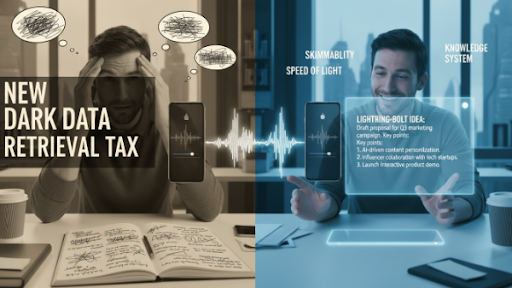
We’ve all had it: a lightning-bolt idea hits on the train or mid-rep, and you grab your phone to spill a quick voice memo. It feels like a tiny victory then, but a week later, it’s just “New Recording 5” buried in the digital junk drawer. Truth be told, in modern workflow,s audio is effortless to grab and maddeningly hard to put to work. And without something to bridge spoken thoughts to written action, those off-the-cuff insights drift away before we can use them.
The Invisible Barrier of the Audio Archive
The snag with voice notes, in my day-to-day, is they’re basically “dark data”—they exist, but good luck searching or grabbing them fast. With dozens of memos piled up, hunting for that one line about a deadline or hook often drains more energy than just starting fresh. I’ve noticed that most professionals eventually abandon voice notes, not because they aren’t useful, but because the “retrieval tax” is simply too high for a busy schedule.
Why Skimmability is the Ultimate Productivity Feature
Human beings are visual processors when it comes to deep work. Text lets us skim and snag a keyword in seconds; audio makes us sit through the clock, and that slowdown hurts. Too many times I’ve been hunched over the scrub bar—rewind, play, sigh—hunting the spot where my tone changes or I finally land the point. This linear constraint makes audio a secondary citizen in a world built for the speed of digital search.
Moving Beyond the “Listen and Type” Slog
From what I’ve seen—and done—the first attempt at hand-transcribing a voice note is usually the last time you bother recording one. It’s tedious, morale-sapping work that squanders hard-won talent. If voice memos are going to pull their weight in a fast workflow, the conversion has to happen automatically. We need the ability to talk at the speed of thought and have the text ready at the speed of light, effectively turning our phones into high-speed intake valves for our broader knowledge management systems.
Scaling Your Personal Knowledge with Automated Transcription
The real shift happens when you stop seeing voice notes as “reminders” and start seeing them as the first draft of your professional output. By integrating an audio to text converter into your daily routine, you effectively eliminate the friction between ideation and documentation. When I record a five-minute brain dump after a meeting, I don’t want to hear it again; I want to see it in my notes app, organized and ready to be tagged. This turns a passive recording into an active asset that can be searched, copied, and transformed into a formal proposal or a blog post.
High-Fidelity Capture for Complex Ideas
One of the biggest hesitations I hear regarding AI transcription is the fear of losing the “vibe” or the specific jargon of the conversation. However, a professional-grade audio to text converter is now sophisticated enough to handle technical terminology and varied speaking rhythms with surprising accuracy. I’ve found that even if a transcript has a few minor errors, having a 95% accurate text file is infinitely more valuable than a 100% accurate audio file that remains unplayed. It provides the skeletal structure of your thought, which is much easier to edit than a blank page is to fill.
Leveraging Time-Stamped Data for Deep Reviews
A feature that often goes underappreciated is the precision of timecoding in modern transcription services like AudioConvert. Seeing the exact timestamp on a thought—right down to the second—lets me edit with a scalpel instead of a broom. If I rambled for two minutes and the “aha” lands at 2:15, I just skip to it. With that precision, I handle voice memos like raw footage—snip the fluff, keep the bits that actually push the project.
Managing Multimedia Insights in a Distributed Workflow
As our comms shift, we lean on video more to capture ideas—especially when a screen share or quick hands-on demo does the talking. They’re packed with useful detail, sure, but they’re a headache to store and share. In a team setting, blasting a raw 4K “quick thought” stalls everyone while downloads crawl and phones choke on playback.
Balancing Resolution and Accessibility with a Video Compressor
Whenever I incorporate video into my “voice memo” routine, I have to be pragmatic about the file size. I’ve found that it is almost always better to run a file through a video compressor before uploading it for transcription or sharing it with a colleague. This ensures that the visual evidence remains sharp enough to be useful while the file remains light enough to move through the pipeline without friction. A compressed file uploads faster to the transcription engine, meaning your text is ready sooner, and your team isn’t bogged down by the technical overhead of high-fidelity media management.
AI Summarization as the Ultimate Filter
The most transformative part of this workflow is the transition from a full transcript to a concise AI summary. I often talk for fifteen minutes just to work through a single problem, and reading back through all that “thinking out loud” can be overwhelming. An AI-driven summary acts as a professional filter, pulling out the actionable items and the core conclusions. It helps me realize when I’ve spent too much time on a tangent and forces me to focus on the “what next.” This distillation process is what turns a rambling voice note into a professional briefing that can be shared with stakeholders immediately.
Cultivating a “Speech-First” Professional Habit
Adopting a speech-to-text workflow is about more than just technology; it’s about changing your relationship with your own ideas. When you know that every word you speak into your phone will be captured, indexed, and summarized with precision, you start to speak with more clarity and purpose. You stop worrying about “forgetting” because the system acts as your external memory. It frees up your cognitive resources to focus on the next big challenge, rather than struggling to hold onto the last one.
By using tools like AudioConvert to handle the mechanical work of transcription, you are essentially buying back your time. You are moving away from the role of a “scribe” and stepping into the role of a “strategist.” In a world where information is moving faster than ever, the ability to capture, process, and deploy spoken ideas is a significant competitive advantage that separates the reactive workers from the proactive leaders.