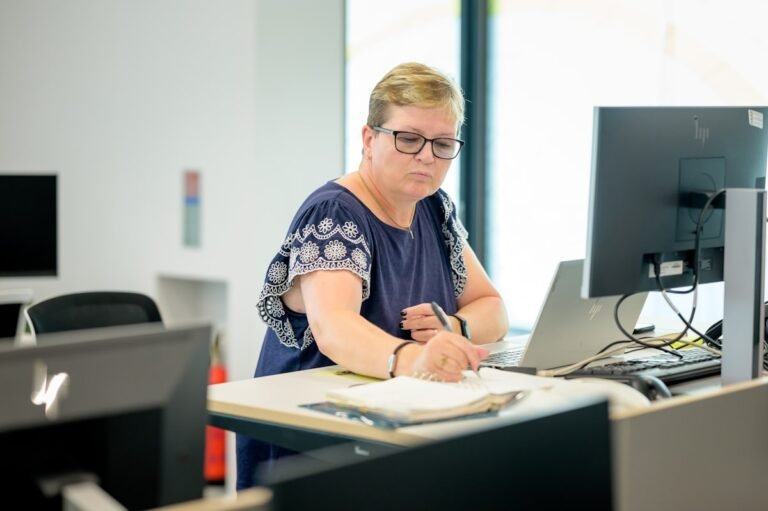
Customized Bookkeeping Services: Key Benefits

You might be feeling like your books are a pile of half-finished spreadsheets, crumpled receipts, and numbers that never quite add up. Maybe you started with the best of intentions, told yourself you would “get caught up this weekend,” and then real work and real life stepped in. Now tax time is coming around again, cash flow feels unpredictable, and you are tired of guessing when what you really need is small business bookkeeping services in Blaine.
You are not alone. Many smart, capable business owners feel a mix of guilt, anxiety, and frustration around their bookkeeping. You know it matters. You also know that every hour you spend wrestling with numbers is an hour you are not serving clients or growing your business. That tension is exhausting.
This is where customized bookkeeping services can change things. Not by drowning you in more reports, but by building a simple, reliable system that fits how you actually run your business. The benefit is not just “clean books.” It is clearer decisions, fewer surprises, and more mental space. In short, you move from reacting to your finances to quietly being in control of them.
So where does that leave you today. Stuck in the mess, or ready to imagine something different.
Why generic bookkeeping fails you and what that really costs
On paper, bookkeeping looks simple. Track income. Track expenses. Reconcile. Done. In reality, every business has its own patterns, seasons, and quirks. When your books are set up in a generic way, they often create more confusion than clarity.
For example, imagine a contractor who has money coming in from multiple projects, with deposits, progress payments, and retainers. If everything is just labeled “income,” there is no way to see which projects are profitable and which ones quietly drain cash. The books technically “balance,” yet the owner still has no idea where the money is going.
Or think of a consultant who pays for software, travel, subcontractors, and ads. If expenses are dumped into a few broad categories, tax deductions are easy to miss and budgeting is guesswork. The result is a gut-level feeling of “I should be doing better than this,” without any clear proof.
That is the problem. Here is the agitation. When your bookkeeping is vague or out of date, a few painful things tend to happen.
- You hesitate to invest or hire because you are not sure what you can truly afford.
- Tax season turns into a scramble, which can increase the risk of errors and penalties.
- You overpay taxes because you are not tracking deductible expenses clearly.
- You feel behind and embarrassed, so you avoid looking at the numbers at all.
The emotional cost is just as real as the financial one. It is hard to feel confident about your business when your money picture is fuzzy. You might even start questioning your own competence, when the real problem is that your systems were never designed around you in the first place.
So what changes when your bookkeeping is customized instead of generic.
How personalized bookkeeping turns chaos into clear decisions
Custom bookkeeping is not a fancy label. It means your financial system is built around the way your business actually works. The categories, reports, and workflows are all designed to answer the questions you care about most.
For a small online store, that might mean tracking profit by product line and return rates. For a freelancer, it might be seeing income by client and understanding which services are most profitable. For a contractor, it might be job costing and clear separation of labor, materials, and overhead. The structure is different, yet the goal is the same. You get numbers that tell a story you can understand.
A customized approach to tailored bookkeeping support often includes things like:
- Creating charts of accounts that match your industry and your goals, instead of using a generic template.
- Building a simple process to capture receipts and invoices in real time, so you are not searching through email at year end.
- Setting up regular reports that highlight what matters. Cash flow, project profitability, or monthly trends, rather than endless pages of data.
- Aligning recordkeeping with IRS expectations. The IRS explains the types of records you should keep in its own guidance on what kind of records to keep.
Because your system is built around your reality, you stop fighting it. You do not have to become a bookkeeper. You just need a flow that fits into your existing habits.
When that happens, several benefits start to show up.
- You can quickly see what is working and what is not, so decisions become less emotional and more factual.
- Your tax preparer has clean, organized data, which can reduce stress, time, and sometimes even fees.
- You build a financial history that can support a loan application or investor conversation if you ever need it.
- You feel less shame and more ownership, because you finally know where you stand.
If you are wondering how this compares to doing it yourself or using a one-size-fits-all service, it helps to look at the tradeoffs side by side.
DIY vs generic vs customized bookkeeping services
The Small Business Administration offers helpful guidance on managing your business finances. Even with good advice, you still face a choice about how to actually handle the day-to-day work. Do you keep doing it yourself. Do you hire a basic bookkeeping service. Or do you invest in personalized bookkeeping that is built around your business.
The differences can be clearer when you see them compared.
| Approach | What it looks like | Main risks | Main benefits |
|---|---|---|---|
| DIY bookkeeping | You manage spreadsheets or basic software on your own, often in bursts before deadlines. | High chance of errors, missed deductions, late entries, and stress at tax time. | Low direct cost, full control, you see every transaction personally. |
| Generic bookkeeping service | Books are maintained in standard categories, with limited customization or guidance. | Data may be accurate, but reports are not tailored, so decisions are still guesswork. | Saves time, improves basic accuracy, reduces last-minute scrambling. |
| Customized bookkeeping service | System is designed around your business model, goals, and IRS recordkeeping expectations. | Requires more upfront planning and communication. May cost more than basic options. | Accurate books plus meaningful insights, easier tax prep, clearer cash flow, and better long-term planning. |
There is no single right answer for everyone. Yet as your revenue grows or your business becomes more complex, the cost of staying in DIY mode often becomes higher than the cost of getting targeted help.
If you are still unsure what good recordkeeping should look like, the IRS provides a helpful starter guide for small businesses in Publication 583, which covers recordkeeping and starting a business. Customized services usually build on this kind of guidance, then translate it into a system that is workable for you day to day.
Three practical steps to move toward calmer, clearer books
You do not have to fix everything overnight. A few focused steps can reduce anxiety quickly and prepare you for more customized support if you choose it.
1. Get honest about where you are today
Set aside an hour and gather what you already have. Bank statements, credit card statements, invoices, and receipts. Do not worry about organizing everything perfectly. Just get it in one place. Notice where the real gaps are. Missing invoices. Cash payments that never got recorded. Old accounts you no longer use. This simple inventory reduces the fear of the unknown, because you can finally see the size of the mess.
2. Decide what you want your numbers to tell you
Before you think about software or services, ask yourself a few practical questions. Each month, what do you wish you knew about your business. Which services or products make you the most money. Which clients or projects drain your energy but not your bank account. How much can you safely pay yourself. Your answers become the blueprint for a customized bookkeeping system. Any bookkeeper you work with should be able to explain how the setup will answer those questions.
3. Choose a simple, consistent process and commit to it
Whether you continue with DIY or move to a professional service, consistency matters more than perfection. For the next three months, decide how often you will touch your books and what exactly you will do. Maybe it is 30 minutes every Friday to categorize transactions and upload receipts. Maybe it is sending your documents weekly to a bookkeeper. The point is to build a small, repeatable habit. Over time, that habit, combined with a customized structure, is what keeps you out of crisis mode.
Moving from financial stress to quiet confidence
You do not need to become an accountant to feel steady and informed about your money. You need a system that respects your time, your goals, and the way your business really works. That is what thoughtful, bookkeeping services can provide when they are tailored instead of generic.
The benefits of customized bookkeeping services are not flashy. They show up in ordinary moments. Opening your bank account and knowing what to expect. Meeting with your tax preparer and feeling prepared instead of panicked. Making a hiring or investment decision with numbers that support your gut, rather than contradict it.
You may still feel behind, or even embarrassed about the state of your books. That is understandable. It is also fixable. With a bit of clarity about what you want your finances to tell you, and with support that is customized to your business rather than forced on it, you can move from constant worry to quiet confidence, one month at a time.