AI Detector Accuracy Under the Microscope: What the Tests Show, and Where They Fail

Artificial intelligence has transformed content creation at a breathtaking pace, but it has also triggered a parallel rise in AI detection tools. Educators, publishers, and SEO professionals increasingly rely on AI detectors to identify machine-generated text. Yet a crucial question remains: how accurate are these tools really?
This article puts AI detector accuracy under the microscope, reviewing what independent tests reveal, where these systems perform well, and where they consistently fall short.
Key Takeaways: What the Evidence Really Shows
- AI detector accuracy is probabilistic, not definitive
- Raw AI text is easier to detect than edited or hybrid content
- False positives are a major, documented issue
- Accuracy varies significantly by domain, tone, and writer style
- Detectors are best used as signals, not judges
How AI Detectors Work: A Simplified Technical Overview
AI detectors are typically trained on large datasets containing both human-written and AI-generated text. They analyze linguistic signals such as sentence predictability, word frequency, perplexity, and burstiness. In theory, AI-generated text appears more statistically “smooth,” while human writing shows irregularities, stylistic shifts, and nuance.
However, modern language models have become increasingly human-like. This narrows the statistical gap detectors depend on. As a result, many tools now operate on probabilistic scoring rather than definitive judgments. A detector may say content is “72% likely AI-generated,” which already hints at uncertainty. This technical foundation explains why accuracy varies dramatically depending on text length, topic, editing level, and even the writer’s natural style.
AI detectors do not “understand” meaning; they infer probability from patterns and patterns can be misleading.
Early Testing Results: What Benchmarks Reveal
Independent benchmarks and academic evaluations show mixed performance across popular AI detection tools. When tested against raw, unedited AI output, most detectors perform reasonably well. Accuracy rates in controlled environments often range between 65% and 85%, depending on the model and dataset.
However, results drop sharply when texts are lightly edited by humans. Simple changes such as sentence restructuring, synonym replacement, or tone adjustments can reduce detection confidence significantly. Some tests show accuracy falling below 50%, which is essentially no better than chance.
| Test Scenario | Average Detection Accuracy |
| Raw AI output | 75–85% |
| Lightly edited AI text | 45–60% |
| Human text (false positives) | 10–30% |
These benchmarks highlight a critical issue: detectors perform best in artificial test conditions, not real-world workflows.
The Role of the AI Checker in Real-World Use
In practical settings, many users turn to an AI checker to assess content authenticity before publishing or submission. Tools like this are often used by universities, content teams, and SEO specialists as a risk-mitigation step rather than a final authority.
In real-world usage, results vary widely based on context. Long-form articles, mixed-author content, or pieces refined by editors often confuse detectors. A human-written paragraph with formal tone and consistent structure may be flagged as AI, while heavily edited AI text may pass as human. This makes AI checkers most useful as diagnostic indicators, not enforcement mechanisms.
Did you know? Some professional writers consistently trigger AI detectors because their style is statistically “too clean.”
False Positives: When Humans Get Flagged as Machines
One of the most controversial failures of AI detectors is the false positive problem. Non-native English speakers, academic writers, and technical authors are disproportionately flagged as AI-generated. Their writing often follows structured patterns, uses predictable vocabulary, and avoids colloquialisms, traits detectors associate with machine output.
A false positive can have serious consequences, including academic penalties or content rejection, even when no AI was used.
This issue raises ethical and legal concerns. If detectors cannot reliably distinguish disciplined human writing from AI output, their use as compliance tools becomes questionable. Several universities have already scaled back enforcement after students successfully appealed AI-based accusations.
False positives are not edge cases – they are a systemic weakness.
Edited AI Content: Where Detection Accuracy Collapses
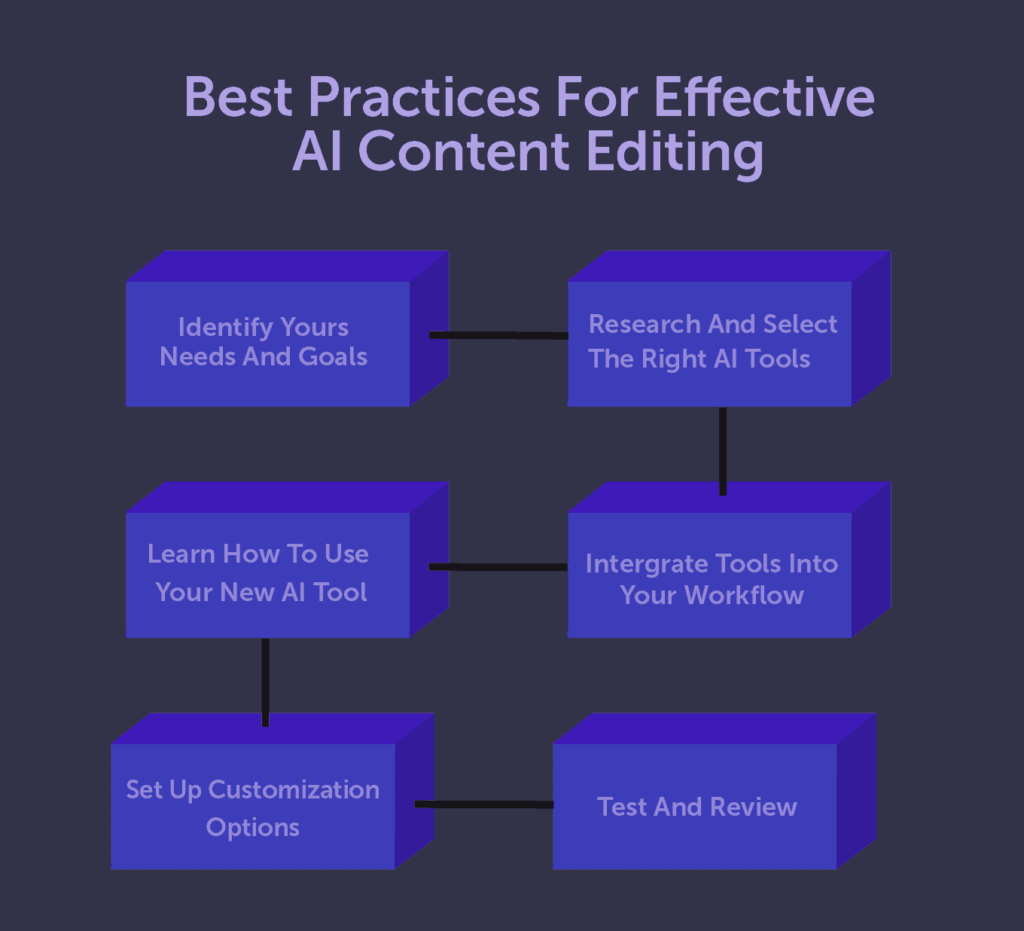
The biggest blind spot for AI detectors is edited or hybrid content. When AI-generated drafts are refined by humans, statistical markers blur. Sentence variation increases, stylistic inconsistencies appear, and perplexity rises, making the text resemble human writing.
Tests show that even minimal human intervention can drastically reduce detection confidence. Adding personal anecdotes, varying sentence length, or reordering paragraphs often pushes AI probability scores below detection thresholds. This creates a paradox: the more responsibly AI is used as a drafting assistant, the harder it is to detect.
From an SEO perspective, this also means detectors struggle to assess content quality or originality. They measure how something is written, not why or how well.
Domain Bias: Accuracy Depends on Topic and Tone
Another under-discussed limitation is domain bias. AI detectors perform differently depending on subject matter. Creative writing, opinion pieces, and narrative content often evade detection more easily due to natural variability. In contrast, technical documentation, legal writing, and medical content are frequently flagged, even when written by humans.
This happens because AI models are heavily trained on factual and instructional text, making detectors more sensitive in those domains. As a result, accuracy is not universal; it is context-dependent. A detector that works well for blog posts may fail miserably on research summaries or policy documents.
Transparency and Testing Limitations
Most commercial AI detectors do not publish detailed methodology, training data sources, or confidence calibration metrics. This lack of transparency makes independent validation difficult. Users often assume scientific rigor where none is publicly demonstrated.
Additionally, detectors rarely update as quickly as generative models evolve. When new language models are released, detectors lag behind, testing against outdated patterns. This creates a perpetual accuracy gap.
AI detectors are reactive tools in a proactive ecosystem. They are always one step behind the models they attempt to identify.
Until standardized testing frameworks and disclosure requirements emerge, claims of “high accuracy” should be treated with caution.
Conclusion
AI detectors promise clarity in a rapidly evolving content landscape, but current evidence shows their accuracy is inconsistent and context-dependent. While useful for broad screening, they fail under scrutiny when applied to edited, hybrid, or highly structured human writing. Until transparency improves and testing standards mature, AI detector results should inform decisions, not dictate them. Understanding their limitations is essential for anyone relying on them in education, publishing, or SEO.