Optimizing Industrial Operations: The Comprehensive Role and Benefits of Material Handling Equipment
In today’s fast-paced industrial landscape, the efficiency of operations is directly influenced by the tools and systems employed to manage, move, and store materials. Among the most critical components that contribute to streamlined workflows are material handling equipment. These systems are designed to improve productivity, reduce manual labor, minimize damage to goods, and ensure workplace safety. The selection and implementation of appropriate material handling equipment can be the difference between an optimized production environment and one plagued with inefficiencies and bottlenecks.
Understanding Material Handling Equipment
At its core, material handling equipment encompasses a wide range of machines, tools, and systems used to move, store, control, and protect materials throughout the manufacturing, warehousing, distribution, and transportation processes. From the simplest hand trucks to complex automated conveyor systems, the primary objective of this equipment is to facilitate the smooth flow of materials, reduce handling time, and enhance operational efficiency. Industrial operations, regardless of size, rely on these tools to achieve scalability, minimize human error, and reduce operational costs.
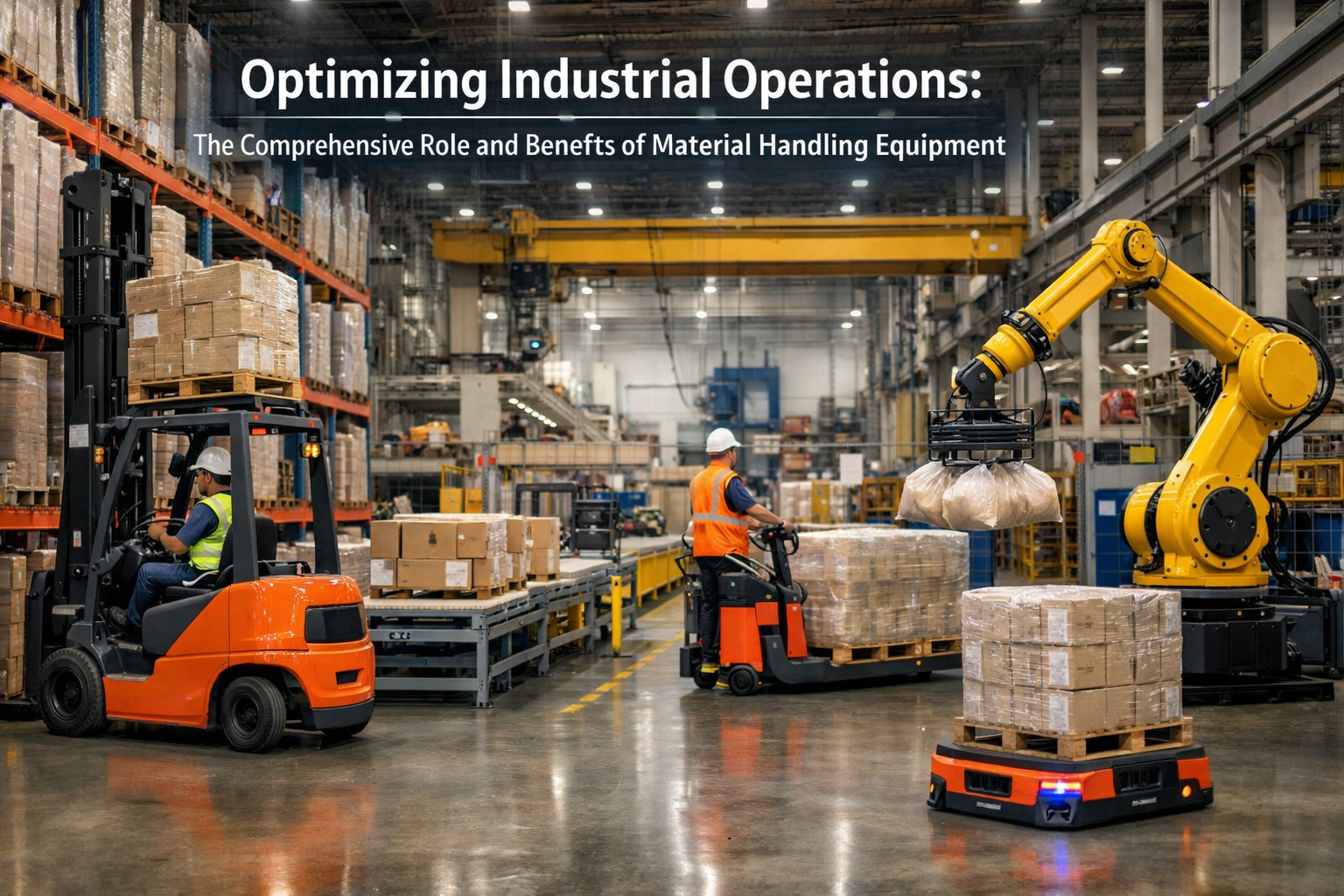
The scope of material handling equipment is extensive, covering manual, semi-automated, and fully automated systems. Manual equipment includes pallet jacks, hand trucks, and dollies, which are typically used for smaller loads or in areas where automation may not be feasible. Semi-automated systems such as forklifts, hoists, and stackers provide increased efficiency while still requiring human supervision. Fully automated solutions, including robotic arms, automated guided vehicles (AGVs), and conveyor systems, allow for continuous, high-speed operations with minimal human intervention.
Categories and Types of Material Handling Equipment
Understanding the various categories of material handling equipment is essential for any operation aiming to optimize workflow and productivity. Equipment is generally categorized based on the mode of operation and the type of material being handled.
- Manual Handling Equipment: This category includes tools that rely primarily on human effort. Pallet jacks, hand trucks, and carts fall under this category. Despite the simplicity of manual handling equipment, its importance cannot be overstated. It is particularly useful for short-distance transport, smaller-scale operations, or environments where automation is not cost-effective.
- Mechanical Handling Equipment: These systems enhance human capability through the use of machinery. Forklifts, cranes, hoists, and conveyors are part of this group. Mechanical handling equipment increases the speed and volume of material movement while reducing physical strain on workers. Cranes and hoists are particularly useful for handling heavy, bulky, or awkward loads that would be unsafe or impractical to move manually.
- Automated Handling Equipment: Automation is increasingly becoming a cornerstone of modern industrial operations. AGVs, robotic arms, and automated storage and retrieval systems (AS/RS) are designed to streamline repetitive tasks with minimal human intervention. These systems can operate continuously, increase accuracy, reduce labor costs, and provide real-time tracking and inventory management, thus improving overall efficiency and profitability.
Benefits of Material Handling Equipment
The integration of material handling equipment into industrial operations brings numerous advantages. Efficiency, safety, and cost-effectiveness are among the primary benefits that make this equipment indispensable in modern operations.
- Enhanced Productivity: One of the most immediate impacts of material handling equipment is the improvement in productivity. By reducing the time and effort required to move materials, operations can run smoother and more efficiently. Automated conveyors or robotic systems can handle thousands of items per hour, far surpassing the speed achievable through manual handling.
- Reduced Labor Costs: By automating repetitive or physically demanding tasks, businesses can allocate human resources to more value-added activities. Material handling equipment minimizes the dependence on manual labor, which not only cuts costs but also reduces worker fatigue and turnover.
- Improved Workplace Safety: Manual handling of heavy materials is a leading cause of workplace injuries. Properly designed material handling equipment reduces the need for workers to lift, carry, or maneuver bulky or hazardous loads. Forklifts, cranes, and automated systems minimize the risk of accidents, contributing to a safer working environment.
- Minimized Product Damage: Frequent handling of materials increases the risk of damage, which can lead to costly losses. Equipment such as pallets, conveyor systems, and automated guided vehicles ensures that materials are moved securely and consistently, reducing breakage and wastage.
- Operational Flexibility: Modern material handling equipment is highly adaptable, capable of handling various materials in different sizes, weights, and shapes. Whether moving raw materials, finished goods, or heavy machinery, these systems provide the flexibility needed to adapt to changing production demands.
Applications Across Industries
The versatility of material handling equipment makes it an essential component in a wide range of industries. From manufacturing plants to warehouses, distribution centers, and retail operations, this equipment supports the movement of goods throughout the supply chain.
In manufacturing, material handling equipment facilitates the transport of raw materials to production lines and finished products to storage areas. Warehouses and distribution centers rely heavily on automated systems such as conveyors and AGVs to handle large volumes of inventory efficiently. Retail and e-commerce operations use specialized handling equipment to streamline order fulfillment, reduce handling time, and maintain product quality. Additionally, construction and logistics sectors benefit from cranes, hoists, and forklifts for moving heavy and bulky materials safely and efficiently.
Key Considerations for Selecting Material Handling Equipment
Selecting the right material handling equipment is a strategic decision that directly impacts productivity, safety, and operational efficiency. Several factors should be considered to ensure the equipment aligns with operational requirements:
- Nature of Materials: The size, weight, shape, and fragility of materials determine the type of handling equipment required. Heavy, bulky, or delicate items may require specialized handling systems.
- Volume of Operations: High-volume operations benefit from automation and mechanized handling equipment to maintain continuous workflow, whereas smaller-scale operations may rely more on manual or semi-automated tools.
- Workplace Layout: The design and space constraints of the facility play a significant role in equipment selection. Conveyors and AGVs may require open pathways and sufficient clearance, whereas forklifts and cranes need maneuvering space.
- Safety Requirements: Ensuring worker safety is paramount. Equipment should comply with industry safety standards and incorporate features such as emergency stops, load sensors, and ergonomic design to minimize risk.
- Cost and Return on Investment: While automated systems may require higher initial investment, the long-term benefits in efficiency, reduced labor costs, and lower product damage often justify the expenditure. A thorough cost-benefit analysis is essential to select equipment that offers the best overall value.
Future Trends in Material Handling Equipment
The field of material handling equipment continues to evolve with technological advancements. Automation, robotics, and smart systems are becoming increasingly prevalent, transforming traditional handling processes. Artificial intelligence and machine learning are being integrated into automated systems to optimize routing, inventory management, and predictive maintenance. IoT-enabled equipment allows for real-time monitoring and data-driven decision-making, further enhancing efficiency and accuracy.
Sustainability is another emerging trend, with equipment designed to reduce energy consumption, minimize waste, and improve overall environmental impact. Electric forklifts, energy-efficient conveyors, and battery-powered AGVs are examples of innovations that align operational efficiency with environmental responsibility.
Conclusion
In conclusion, material handling equipment is an indispensable element in modern industrial operations. From improving productivity and reducing labor costs to enhancing safety and minimizing product damage, the benefits of incorporating the right handling systems are clear and substantial. By understanding the types, applications, and considerations for selection, businesses can strategically implement material handling equipment to achieve operational excellence. As technology continues to advance, the future of material handling promises even greater efficiency, flexibility, and sustainability, ensuring that organizations remain competitive in an increasingly dynamic industrial landscape.
Integrating the right material handling equipment is not merely a logistical decision—it is a strategic investment that shapes the efficiency, safety, and profitability of operations, making it a cornerstone of modern industrial success.