Top 10 Best AI Glasses in 2026
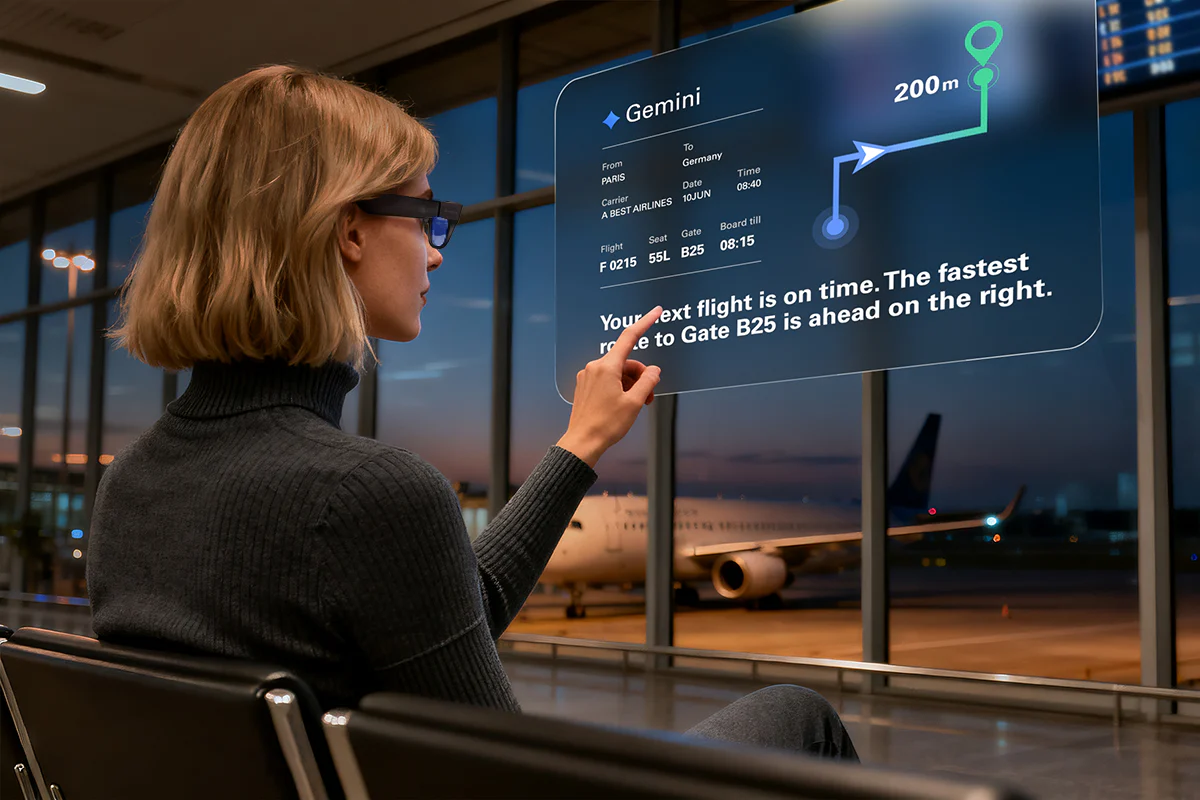
Smart glasses finally split into two grown-up categories: AI-first frames that listen, and sometimes see (with a camera), and answer, and display-first glasses that put a private screen in front of your eyes. In 2026, the Best AI Glasses picks blur that line, using on-device sensors plus cloud AI for translation, guidance, and quick “what am I looking at?” help.
This list focuses on what you can actually live with: comfort, battery, cameras (or the choice to skip them), and how well the AI stays helpful without becoming noisy. The goal is Best AI Glasses you’ll keep wearing, not just testing for a weekend—especially if you want a real display, not just audio —including display-first glasses that can run AI workflows via your phone/PC.
How we ranked these Best AI Glasses for 2026:
- Everyday wearability (weight, fit, and “can I forget they’re on?”)
- AI that’s useful in seconds (voice speed, translation, context)
- Optics or capture quality (if there’s a display or camera)
- Ecosystem fit (apps, updates, and developer support)

RayNeo X3 Pro
If you want the “AI + real display” dream today, RayNeo X3 Pro is one of the clearest attempts at an onboard-compute binocular AI+AR system with optional phone companion controls. RayNeo X3 Pro pairs a diffractive waveguide with MicroLED, rated at 3,500 nits average and 6,000 nits peak brightness.
What makes RayNeo X3 Pro feel like Best AI Glasses material is the practical stack: Snapdragon AR1 Gen 1, 4GB RAM, Wi-Fi 6, and a 76g frame. RayNeo X3 Pro also adds a dual-camera setup (including a 12MP Sony sensor) plus real-time translation across 14 languages for travel and meetings, with many AI features relying on Wi-Fi/cloud services.
RayNeo’s AI Smart Glasses collection page lists RayNeo X3 Pro at $1,099 (regular $1,299); availability may vary by region. Pricing, taxes, and currency can vary by region and promotions. In a Best AI Glasses comparison, that places it in the premium tier for always-on display smart glasses.
Meta Ray-Ban Display
Meta’s Ray-Ban Display is the big mainstream proof that a discreet in-lens screen can work without screaming “prototype.” Reports around CES 2026 highlight a private in-lens display, wrist-based controls via the Neural Band, and new features like a teleprompter mode. For some shoppers, that’s the “future” version of Best AI Glasses.
The catch is availability. Multiple outlets say demand has outpaced supply, with international expansion paused while Meta prioritizes U.S. orders. Meta’s own site also frames it as a schedule-a-demo purchase in the U.S. If you’re comparing RayNeo X3 Pro and Meta’s approach, RayNeo X3 Pro looks like the easier “direct-order” path, while the Display is the one you chase.
Ray-Ban Meta (Gen 2)
If you want camera-first AI glasses that look like normal eyewear, Ray-Ban Meta (Gen 2) is still the safe bet. Tom’s Guide calls it the best AI smart glasses option, pointing to improved camera and battery life alongside regularly updated Meta AI.
Meta says the Gen 2 model can reach up to eight hours of typical use on a charge, which is a meaningful jump for people who actually wear these all day. If RayNeo X3 Pro is your display-forward Best AI Glasses pick, Ray-Ban Meta is the “capture and ask questions later” choice.
Rokid AI Glasses Style
Rokid’s AI Glasses Style leans into the “screenless assistant” idea: voice-first help, a camera for context, and a design that aims to feel light enough for daily wear. TechRadar reports a 38.5g weight, a 12MP camera, and support for tasks like translation and object identification.
In the Best AI Glasses conversation, Rokid is appealing because it’s simple: talk, capture, and move on. It’s also a useful comparison point against RayNeo X3 Pro—Rokid prioritizes capture and assistance, while RayNeo X3 Pro adds an always-there visual layer.
Solos AirGo V2
Solos pitched AirGo V2 at CES 2026 as a practical, modular take on AI glasses: swap components, extend battery life, and lean on multimodal assistants. Coverage notes a 16MP camera with stabilization, Full HD video, and AI that can pull from models like ChatGPT, Claude, Gemini, and DeepSeek.
For readers hunting Best AI Glasses that feel less locked-in, AirGo V2’s modular “SmartHinge” concept is the point. If RayNeo X3 Pro is your display-heavy daily driver, AirGo V2 is the flexible “AI camera and audio” option beside X3 Pro.
Even Realities G2
Even Realities took a contrarian route: make a quiet heads-up display that supports your phone, via phone connectivity for AI services, and keep the design low-drama by skipping cameras and focusing on in-view text overlays. Wired notes the G2’s focus on display utility—notifications, navigation, and translation—without the social friction of a lens staring at people.
Even’s own product page emphasizes real-time subtitles/translation (31 languages) and navigation overlays, with “Hey, Even” voice prompts to pull quick answers, with the companion app handling connectivity and translation. As Best AI Glasses go, it’s a good pick for pros who want information in-view; RayNeo X3 Pro is the better fit if you also want cameras and richer on-glass interaction.
Amazon Echo Frames (3rd Gen)
Echo Frames are the “voice assistant everywhere” play, and they’re still one of the most approachable ways to put Alexa on your face. Tom’s Guide highlights improved style options, better audio, and longer battery life versus the previous generation.
They’re not as visually ambitious as RayNeo X3 Pro, but that’s the point. If your Best AI Glasses shopping list is about calls, quick reminders, and lightweight audio without a camera, Echo Frames stay relevant—especially when discounted from their $269.99 starting price.
Xreal 1S
Not every “best” choice needs a built-in assistant. Xreal 1S is an AR display-first option that earns its place because it turns any USB-C device into a private, wearable screen—perfect for travel work or handheld gaming. Tom’s Guide lists a Micro-OLED display (1200p resolution (16:10) at 120Hz, up to 700 nits brightness) and a 52-degree field of view.
Pair Xreal 1S with your preferred mobile AI, and it becomes a legit Best AI Glasses workflow tool: live notes, translation windows, and dashboards you can glance at without pulling out a laptop. If RayNeo X3 Pro is your all-in-one, Xreal 1S is the “bring your own AI” alternative.
Vuzix Z100
Vuzix Z100 is closer to a minimalist HUD than a full AI platform, but that’s exactly why some people prefer it. Vuzix frames it as a “phone in pocket” device: connect through the Vuzix Connect app and surface notifications in-view while you walk, run, or work.
For Best AI Glasses buyers who care about discretion and durability over cameras, Z100 can be a sensible choice—especially in workplaces where recording is a no-go. It also complements RayNeo X3 Pro: keep Z100 for alerts, and save RayNeo X3 Pro for heavier AI+AR sessions.
Brilliant Labs Frame
Brilliant Labs Frame is the nerd’s pick: a small, transparent display plus an open development posture that invites tinkering. Brilliant’s own hardware docs describe a 640×400 display with a 20° field of view, designed to look like a floating screen about the size of a tablet at arm’s length.
If your Best AI Glasses priority is experimentation—custom agents, on-device prompts, and fast prototyping—Frame’s documentation and GitHub presence make it unusually welcoming. It’s not trying to replace RayNeo X3 Pro, but it does offer a different way to think about RayNeo X3 Pro: as a consumer platform, while Frame stays a builder platform.

Final take
In 2026, “Best AI Glasses” really means choosing your interface: camera-first assistants, screenless voice helpers, or quiet displays that pull information forward. The most exciting trend is convergence—AI that can see, plus displays that can stay subtle enough for daily use.Here, “AI glasses” includes both built-in AI frames and display-first glasses that reliably run AI workflows through your phone/PC.
If you want one buying shortcut:
- Want a real display + AI in one? Start with RayNeo X3 Pro, then compare fit and controls to your daily habits.
- Want mainstream style + AI capture? Ray-Ban Meta (Gen 2) is the baseline Best AI Glasses pick for most people.
- Want a private in-lens screen? Meta Ray-Ban Display is the headline Best AI Glasses play—if you can get it in your region(and a demo slot where required).
- Want modular, multi-model AI? Solos AirGo V2 is the experimenter’s Best AI Glasses choice.
- Want camera-free information overlays? Even Realities G2 is the quiet pro Best AI Glasses option.
No matter what you buy, treat Best AI Glasses like software: updates, privacy controls, and ecosystem support will matter as much as the frame. That’s also why RayNeo X3 Pro stands out—its specs and control options read like a platform, not a one-season gadget.