Deni Avdija Is a New NBA Star, and the League Is Still Adjusting
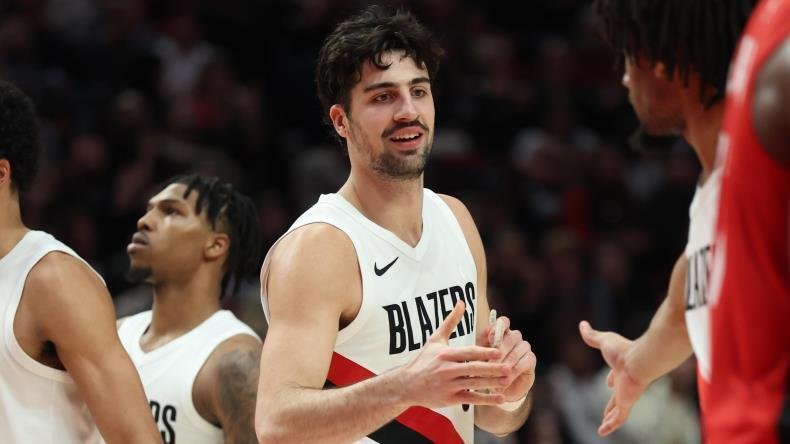
NBA reputations change when responsibilities change. Avdija’s turning point was not a single explosion game, it was the week-to-week shift from “useful option” to “automatic choice” when the game tightened. Coaches left him on the floor to close quarters, not to gain “development minutes” but to protect leads, survive scoring droughts, and clean up possessions that got messy.
Late-game roles reveal status. Avdija started taking the matchup nobody volunteers for, the opposing wing who can score, pass, and bait fouls. He defended without reaching, stayed in stance through multiple actions, and forced the ball out of comfort zones. That kind of work changes how teammates behave. When players trust the stop is possible, they run offense with less panic. They cut harder, pass cleaner, and commit to the game plan instead of freelancing.
Opponents showed the same respect in a different language. They ran more screens to drag him away from the primary handler. They shifted actions to the weak side when he guarded the strong side. They tested him early, then stopped testing him as often. Those adjustments are not compliments, they are admissions that his presence affects expected value on a possession.
His offense also started reflecting closing-time trust. He received the ball in the middle of the floor, not just in corners. He attacked closeouts with a plan, not with hope. He made the pass that kept the possession alive, then repositioned for the next decision. These choices look ordinary until you realize how rare they are under pressure.
The real change was consistency under stress. Avdija did not need perfect spacing or perfect matchups to contribute. He carried a stable level of defense, rebounding, and decision-making even when shots did not fall. That stability is what teams pay for, build around, and protect in playoff rotations. Star status begins there, long before a player becomes a nightly headline.
Built between systems, not between hype cycles
Avdija’s game makes sense when you treat it as a hybrid, not a transition. He did not arrive in the NBA as a blank slate waiting to be “Americanized.” He arrived with habits built in a system that rewards structure, timing, and accountability, then learned to apply those habits inside a league that rewards pace, space, and instant punishment of mistakes.
European development often teaches players to see the whole possession first. You learn why a screen matters even when you are not the shooter. You learn spacing as geometry, not as a vibe. You learn defensive rotations as rules that protect teammates, not as optional effort. Those lessons show up in Avdija’s positioning. He tends to be early rather than late. He chooses angles that reduce options. He moves to spots that make the next pass easier.
The NBA asks for a different layer. It asks you to read quicker athletes in more open space. It asks you to make decisions before help fully commits. It asks you to punish the smallest mistake, because defenders recover faster than they did a decade ago. Avdija’s growth came from adding that speed without losing the structure underneath.
This is why his improvement can look “quiet.” He did not reinvent himself every offseason. He tightened the handle enough to beat closeouts. He improved shot selection so attempts matched rhythm. He built strength so contact did not knock him off lines. He became more decisive in the paint, finishing through bodies instead of trying to avoid them. These are not flashy upgrades, but they shift a player’s baseline.
Hype cycles tend to reward extremes, big nights and ugly slumps. Avdija has been more of a slope. His game has fewer wild swings because it rests on repeatable actions. When the environment changes, new coach, new role, new teammates, the foundation still holds. In a league that changes quickly, that kind of stability becomes a form of star power.
Defense as responsibility, not reputation
Avdija treats defense like a contract clause, not a branding tool. His value starts with the fact that he can guard multiple types of players without forcing a scheme change. That is not a buzzword, it is a practical advantage across an 82-game season where opponents present different threats every night.
On-ball, he wins with angles and patience. He stays square long enough to deny the first step, then uses strength to absorb shoulder contact without losing balance. Against smaller guards, he does not chase hands, he controls space. Against bigger wings, he does not concede the middle, he meets them early and makes every dribble expensive. This is where his discipline matters, because the NBA punishes defenders who guess.
Off-ball, he does the hard part that fans rarely track. He tags rollers, then recovers to shooters. He bumps cutters, then finds the next man. He communicates early on switches so teammates do not arrive confused. Many “good defenders” only defend their assignment. Avdija often defends the possession, meaning he solves problems before they become open threes.
His defense also fuels his offense in a direct way. He rebounds and immediately looks upcourt, which turns stops into pace before the defense sets. He gets deflections that become controlled possessions, not loose scrambles. He blocks out, even when he is not the one grabbing the ball, which allows teammates to run. These contributions stack up across minutes.
Coaches value defenders who keep coverage intact. If a defender misses a rotation once, it becomes a chain reaction. If a defender closes out out of control, it becomes a blow-by. Avdija rarely creates those chain reactions. He is the guy who prevents them.
That reliability changes lineup math. Teams can pair him with smaller guards because he can take bigger wings. They can play faster because he stabilizes transition defense. They can hide weaker defenders because he can help without abandoning shooters recklessly. When a player gives a coaching staff more workable lineups, that player becomes essential. That is how a defensive identity turns into star-level impact.
Offensive growth without noise or force
Avdija’s offensive rise is built on choice, not on volume. He has improved by making his touches more valuable, not by demanding more touches. That difference matters, because it makes him scalable next to high-usage stars and still impactful when asked to create.
He attacks advantages quickly. When he catches the ball and a defender closes out too hard, he drives into space with his shoulders under control. He keeps the dribble tight enough to avoid strips, then makes a decision before the second defender fully arrives. That timing is the whole game at NBA speed. If you wait, help recovers. If you rush, you miss reads.
He also understands when a possession needs calm. Some players treat every catch as a scoring chance. Avdija often treats it as a chance to fix the possession, to swing the ball, to cut into space, to set a screen that frees someone else, then to relocate and be ready again. Those actions keep an offense from turning into “your turn, my turn.”
His passing stands out because it is practical. He makes the kick-out to the shooter’s pocket. He hits the short roll with the right pace. He sees the extra pass when a defense loads up. These are not highlight assists, but they create the kind of shots teams want, corner threes, rim attempts, and free throws.
His finishing has improved because he accepts contact instead of avoiding it. He uses strength to keep his line, and he extends through defenders rather than fading away. That makes him harder to guard, because defenders cannot just “show bodies” and assume he will bail out.
The best analogy for his offensive style is spatial discipline. He plays like someone who understands traffic flow in a crowded room, where a small step in the wrong direction causes collisions, and where smart spacing keeps everything moving, like a dining space where the arrangement of restaurant tables determines whether service runs smoothly or turns into chaos. Avdija’s spacing, timing, and restraint create smooth possessions, even when nothing looks spectacular. That is real offensive value.
Carrying expectation without performing confidence
Expectation can distort a player’s development, especially when it follows them across countries and media ecosystems. Avdija has carried public attention for years, not just as a young NBA player but as a visible representative of a basketball community that watches closely. That scrutiny can push players into defensive habits, forcing shots to prove they belong, talking too much, hunting moments.
Avdija’s response has been the opposite. He rarely performs confidence. He builds it through repetition and composure. When his shot was inconsistent, he did not try to shoot his way out of criticism in a week. He worked mechanics, cleaned shot selection, and accepted that improvement would look gradual. When people questioned his aggression, he did not become reckless. He became more decisive at the right times, attacking when the defense was tilted, not when the defense was set.
His emotional control is a competitive skill. NBA games swing fast. A missed call turns into a transition three. A bad turnover becomes a run. Players who carry frustration into the next possession give away points. Avdija tends to reset quickly. He argues less with the game and responds more with execution. That keeps him usable in moments where coaches shrink rotations.
Pressure also tests role acceptance. Some players resist their role because they believe it limits their ceiling. Avdija has often used his role as leverage. He took the hard defensive job, the rebounding job, the connective passing job, then expanded from there. That is a smart path because it earns trust first, then earns freedom.
This mindset affects teammates too. Young players watch who stays stable when things go wrong. Veterans respect players who do not waste possessions. Coaches notice who stays locked into the plan. These are the people who become anchors.
The result is a player who looks calm under bright lights, not because he is passive, but because he learned how to keep emotion from hijacking decision-making. In the NBA, that trait separates “talented” from “reliable,” and reliability is what turns a player into a star.
Why modern metrics value him before fans do
Fans often identify stardom through points, usage, and highlights. Teams often identify it through impact, possession quality, and lineup stability. Avdija shows up strongly in the second set, which is why analysts and coaches can sound ahead of the public conversation.
Lineup performance is one of the simplest ways to see his value. Units with him tend to defend more consistently, not because he racks up steals, but because he reduces breakdowns. They also tend to play with better flow, not because he dominates the ball, but because he keeps possessions connected. A “connector” is not a vague label. It means the ball does not stick. It means the offense keeps creating second and third advantages. It means the team avoids empty trips where nothing happens.
On-off splits can reflect this kind of player. When he is on the floor, the team often looks more organized, even if he is not scoring 25. The defense rotates earlier. Transition coverage is cleaner. The ball finds the right side of the floor more often. Those are measurable outcomes even when they do not create viral clips.
Scalability matters as well. Some players only add value when the system is tailored to them. Avdija can add value next to a primary creator because he defends the best wing and makes quick reads. He can add value with bench units because he stabilizes possessions and rebounds. He can shift between roles without changing effort. That reduces the coaching burden and increases lineup options.
This is why modern evaluation catches him early. It is easier to see his effect across hundreds of possessions than across a few highlights. His value is cumulative. Over a season, cumulative value wins games, protects stars, and keeps teams competitive when injuries or slumps hit.
Recognition will always lag behind these realities, because public narratives move slower than film and data. But the front offices do not wait. They invest in players who raise the team’s baseline. Avdija does that, and that is why the league treats him like a rising star even when casual discourse still debates the label.
What his rise signals about the future of NBA stardom
Avdija’s emergence fits the direction the NBA has been moving for years. The league increasingly rewards wings who can defend multiple positions, make fast decisions, and contribute without monopolizing the ball. The old model, one star scorer plus specialists, still exists, but postseason basketball punishes one-dimensional players. Teams hunt mismatches. They force switches. They target weak defenders. They trap high-usage scorers and dare role players to read the game.
Avdija helps solve those problems. He can stay on the floor in different matchups because he defends well enough to survive targeting. He rebounds, which ends possessions. He pushes in transition, which creates early offense. He passes well enough to punish overhelp. He also scores enough to keep defenders honest. That combination is valuable in a regular season. It becomes even more valuable when scouting tightens in a series.
His game also projects well over time. Players who rely on burst can decline sharply when athleticism dips. Players who rely on reads, strength, and timing usually age better. Avdija’s best traits, positioning, decision-making, physical defense, should remain useful deep into his career. That increases his long-term star potential, because availability and steadiness often matter more than peak flash.
Leadership is another piece that tends to grow for this type of player. Loud leadership is not the only kind. Some players lead through habits, consistent effort, and correct decisions. Avdija already provides that. As his status rises, his voice will likely rise with it, and teammates will follow because the example is real.
Calling him a new NBA star does not require exaggeration. It requires updating the definition. Modern stardom includes the player who stabilizes lineups, guards elite opponents, and keeps the offense functional when the first option is pressured. Avdija is increasingly that player. The league has adjusted its scouting reports accordingly. Public recognition usually arrives after that stage, not before it.