Surging Trend of Hybrid Nursing: Impacts on Students
Know the Effects of Hybrid Nursing Education on Students
Hybrid nursing is the integration of digital theory and physical clinical training. This guide lets you know the impacts of it on the next generation of healthcare professionals. Also, this study checks if digital lessons actually prepare students for a fast-paced curriculum in a hospital. It is one of the most crucial nursing dissertation topics UK, which shows diverse outcomes. Ultimately, it says that new technology doesn’t replace the hands-on kindness and quick thought process that every nurse needs to save lives. So, you must know the impacts of hybrid nursing education on students in both ways.
Positive Effects of Hybrid Nursing Education
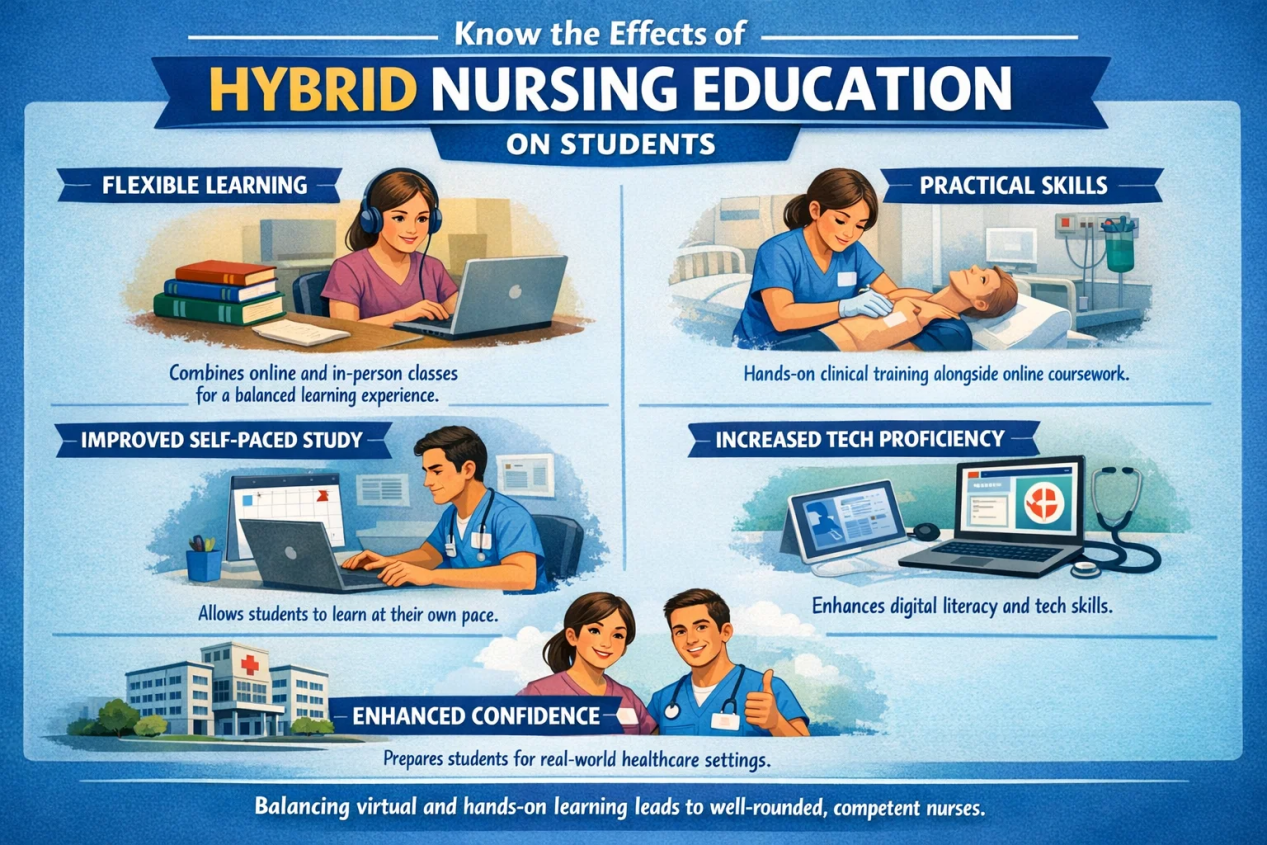
Hybrid education offers a modern way for students to master the complex world of healthcare. It blends the ease of home study with the intense focus of hospital practice. This mix creates a balanced lifestyle and prevents heavy burnout in old programs. Also, students become experts who use the latest medical software and digital records with ease. Thus, they graduate with the tech skills and practical experience needed to succeed in any busy, high-tech hospital environment today.
Personalised Learning
Online lessons help you to learn tough medical ideas at your own pace. A student can watch a video about the heart as many times as needed to understand it. This “self-paced” learning ensures they master complex topics easily. Also, it moves away from old teaching styles. For using new writing styles, you can use the Harvard referencing generator UK. Thus, each student gets a learning journey built just for them.
Increased Flexibility
Students get the freedom to control their own schedules. This helps them balance intense studies with their jobs or family needs. It manages nursing school stress well. Also, students can learn in their own time. Thus, their well-being improves. They feel less pressure and stay engaged in their courses. This flexible approach is perfect for busy lives. It truly promotes a much healthier and more effective way for nurses to learn.
Optimised Lab Time
Hands-on lab time becomes much more beneficial because you can learn theory online. Students spend less time sitting in lectures and more time actually practising nursing skills. They can focus on mastering vital tasks like giving shots or using new medical tools. Also, the time with teachers is purely practical. Thus, every minute of lab time counts. This makes sure students build the actual and vital skills which make it valuable for their future job.
Digital Fluency
Hospitals use computers for everything now, from patient records to online doctor visits. Hybrid classes force students to use different computer programs daily. This makes them experts in hospital tech before they graduate. Also, they gain a huge professional advantage. Thus, graduates are fully ready for the tech-driven healthcare system right away. Using digital tools constantly ensures they feel confident and capable when they finally enter a real hospital ward.
If you want to learn about the new digital tools and their application process, check out Assignment Desk for step-by-step guidance.
Negative Effects of Hybrid Nursing Education
While this method is modern, it brings specific challenges that can hinder student progress and well-being. Too much time behind a screen often leads to severe mental exhaustion and a sense of isolation from friends and family. Also, students may struggle to learn the non-verbal cues and deep empathy which are needed for bedside care without constant human contact. Thus, schools must provide extra support to ensure that these technical and social gaps do not hurt the professional growth of a new nurse.
Social Isolation
Well, nursing is a team-based profession that relies on strong human interactions and support. Online learning can make students feel lonely or cut off from their classmates. Also, the lack of face-to-face interaction makes it difficult to build a supportive student network. Thus, students might feel unsupported during the most stressful parts of their training. Missing out on the social side of campus life can hurt their overall mental health.
Soft Skill Gaps
Most of the students can miss the chances to learn critical skills such as empathy and effective communication. These soft skills are very crucial for building connections with patients and doctors in high-pressure situations. Also, it is really complicated to teach emotional intelligence through a virtual platform. It can develop the gap in communication and in-person skills. Thus, you need to work more on this to improve the connection with patients in a real hospital.
Technical Barriers
Not every student has access to a fast computer or a steady internet connection at home. Technical problems like crashed websites or lost Wi-Fi can cause immense stress during exams. Also, some students might struggle to learn new and complex software programs. Thus, these technical barriers can prevent you from submitting your assignment writing services on time. It creates an unfair challenge for those who do not have access to the network.
Digital Fatigue
Working with a computer screen for many hours a day can lead to brain fatigue. It basically leads to burnout, headaches and lack of focus during sessions. Also, it is hard for students to absorb and remember crucial medical information. Thus, their academic performance can suffer because of mental exhaustion and stress. Taking regular breaks is vital to keep the mind sharp and ready.
All you need is to keep all these impacts in your consideration, and take full advantage of your studies and the resources available.
Final Thoughts
The hybrid nursing education is no longer an experiment. It is a blueprint for the future of the profession. This kind of learning is the only way to prepare nurses for the digital-first hospitals. Plus, students can enter with a massive head start in data literacy. But the greatest danger it shows is the empathy gap. They can struggle with cues of bedside care. It makes the degree accessible to working-class students and parents who simply cannot attend a physical campus five days a week. In nursing dissertation topics UK, it is still one of the most talked about concepts.