Johnny Santiago Valdez Calderon on Cultivating the Next Wave of AI Innovators
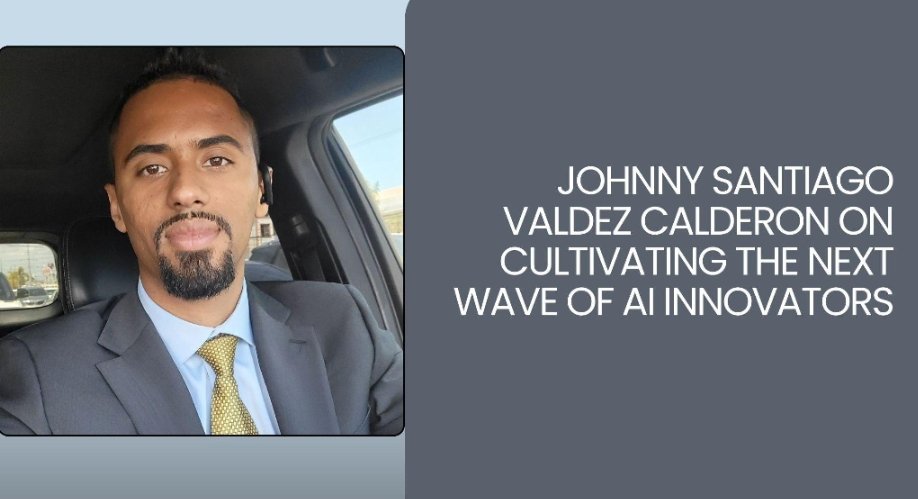
Artificial intelligence continues to reshape industries, but the real force behind its progress is people. Models grow stronger each year, yet the breakthroughs that matter most come from teams who know how to think creatively, solve real problems, and push boundaries with purpose. Johnny Santiago Valdez Calderon has built his career around that idea. He believes the future of AI depends less on raw algorithms and more on cultivating innovators who understand how to use them wisely.
Valdez Calderon spends much of his time mentoring engineers, advising startups, and guiding enterprise teams through the growing maze of AI tools. He sees a clear pattern. Technical skills are important, but they are not enough. What separates average teams from standout innovators is mindset. Strong innovators ask the right questions, understand human needs, and know how to pair technical insight with practical judgment.
Build fundamentals before chasing trends
To Valdez Calderon, the biggest mistake new AI practitioners make is skipping the basics. They jump straight into advanced models without learning how data flows, how systems scale, or how to evaluate results. This creates shallow success. It looks impressive at first but collapses when the work gets complex.
He encourages teams to build a strong base in core concepts. Data preparation, feature understanding, model behavior, and performance metrics still matter, even in an era of powerful language models. When people know the fundamentals, they adapt quickly to new tools. When they do not, every update feels like a fresh hurdle.
He often reminds newcomers that innovation does not come from chasing whatever is trending online. It comes from understanding why something works and how it can be applied to real problems.
Promote structured experimentation
Many organizations claim to support experimentation, but few provide the structure that allows ideas to grow. Valdez Calderon has seen this challenge across companies of all sizes. Too much freedom leads to scattered efforts. Too much control smothers creativity.
His solution is a simple framework. Teams should explore freely at the start, gather insights, then narrow their best ideas into testable pilots. Each pilot should have a clear objective and a small timeline. This structure encourages creative thinking while keeping teams focused.
He believes innovators need room to make mistakes, but they also need guidance on how to learn from them. Documenting experiments, reviewing results, and capturing lessons helps ideas mature. Over time, this builds a culture where people are not afraid to try new things because they know their efforts will be used and refined, not wasted.
Focus on human centered problem solving
Valdez Calderon stresses that AI innovation is not a technical contest. It is about solving human problems. He advises teams to spend more time listening to users, mapping their pain points, and understanding the environment around the technology.
He encourages innovators to ask simple but powerful questions. What is the real problem? Who benefits from the solution? How will it change their daily work? What risks or frustrations could arise?
When teams approach AI with this mindset, they create tools that people actually want to use. They solve meaningful problems instead of building features that look flashy but add little value. Human centered thinking keeps innovation grounded and ensures that the outcomes feel useful, not academic.
Develop communication as a core skill
One of the areas Valdez Calderon emphasizes most is communication. Innovators need to explain ideas clearly to non technical teams. They need to build trust with leadership. They need to translate complex concepts into simple terms so everyone can make informed decisions.
He encourages practitioners to practice sharing their ideas in plain language. Clarity builds alignment. Alignment speeds progress. It also helps teams identify risks earlier because people feel comfortable raising concerns.
In his view, the best AI innovators are not those who speak in jargon. They are those who can guide others through the process with confidence and clarity.
Create pathways for continuous growth
AI evolves quickly, and innovators must grow with it. Valdez Calderon believes every organization should create structured learning pathways. This can include mentorship programs, internal workshops, shared code libraries, and time set aside for research.
He also recommends peer review. When people review each other’s work, they expand their perspective and catch blind spots that might go unnoticed. Peer learning builds stronger teams and accelerates skill development.
Finally, he encourages companies to support cross functional exposure. When engineers learn about business strategy, customer needs, and design thinking, they build a holistic view of how AI fits into the organization. This broader understanding leads to smarter, more grounded innovation.
A future shaped by thoughtful creators
Valdez Calderon sees the next wave of AI innovation coming from teams who combine technical depth with curiosity, empathy, and clear thinking. Tools will continue to improve, but people will remain the real engine of progress.
By focusing on fundamentals, structured experimentation, human centered thinking, strong communication, and continuous growth, organizations can cultivate innovators who shape the future with intention rather than impulse.
The result is a culture where creativity thrives, ideas take root, and AI becomes a force for real change rather than empty excitement.