Radiographic Evaluation and Follow-Up After Humeral Nail Fixation
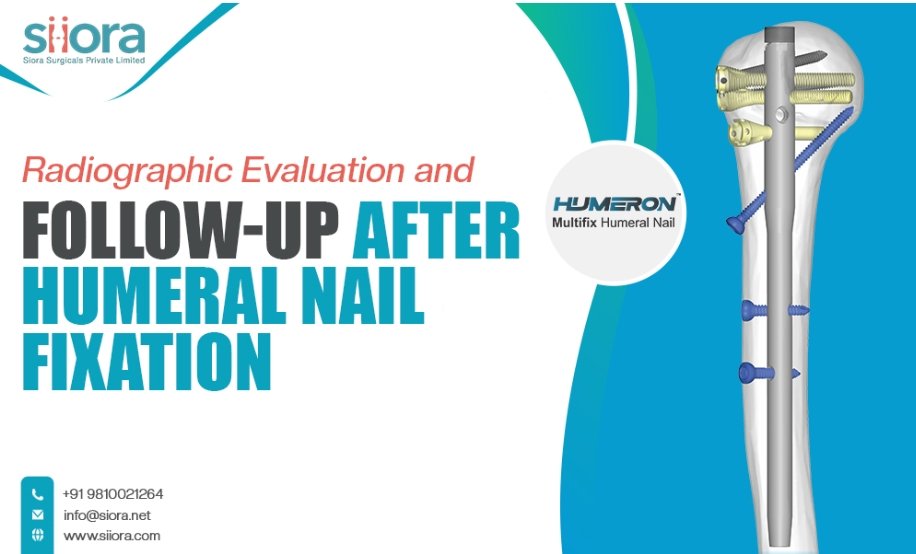
The surgery to fix your broken upper arm (humerus) is done. The surgeon placed a strong metal humeral nail down the center of the bone, and the post-op X-ray shows everything is lined up perfectly. That’s a huge relief. But that first X-ray is just the cover of the book. The real story of your recovery is told in a series of images taken over the next few months. When you come in for a follow-up appointment and your surgeon pulls up your X-ray, they aren’t just looking at a picture of a bone; they are reading a progress report written by your own body.
The Starting Point: The Immediate Post-Op X-Ray
This first image, usually taken right in the recovery room, is our blueprint. It’s the “before” picture against which all future “after” pictures will be compared. We are meticulously checking a few key things:
- The Reduction: Are the bone fragments perfectly aligned? Is the length of the bone correct? Is there any angulation or rotation? We want to see a straight bone.
- The Hardware: Is the nail in the dead center of the bone canal? Are the locking screws at the top and bottom the perfect length—not too short to be weak, and not too long to irritate the surrounding nerves or tendons?
- This X-ray confirms that the foundation for healing has been perfectly set.
The First Follow-Up (2-6 weeks): The Stability Check
When you come back for your first major follow-up appointment a few weeks later, we pull up the new X-ray and place it side-by-side with the one from surgery. At this early stage, we don’t expect to see much healing. The fracture line will still be sharp and clear. So, what are we looking for? One word: stability.
Has anything moved? Are the screws in the exact same position? Are the bone fragments in the same alignment? If the answer is “yes,” that’s fantastic news. It tells us that the nail is doing its job perfectly, providing a rock-solid, stable environment. This gives us the confidence to have you continue and progress with your physical therapy, working on your shoulder and elbow motion without fear of disrupting the repair.
The Healing Phase (6-12 weeks): Looking for the “Fluffy Cloud”
This is where it gets exciting. Around the six-week to three-month mark, we start looking for the first visible signs of healing. We’re looking for something called a callus. The best way to describe it is a “fluffy cloud” of new bone that your body starts to build around the fracture site. It’s nature’s own internal cast, and it’s the most beautiful thing a fracture surgeon can see.
On the X-ray, we look for this callus to start bridging the fracture gap. Is it forming on multiple sides of the bone? At the same time, we want to see the sharp, clear fracture line start to get blurry and indistinct. This tells us the bone ends are “getting to know each other” and starting to unite. This radiographic evidence, combined with you having less pain, is what gives us the green light to allow more aggressive strengthening and activity.
The Red Flags: What Surgeons Don’t Want to See?
Of course, they are also constantly on the lookout for signs of trouble.
- Nonunion: If months go by and the fracture line remains stubbornly sharp with no callus formation, we start to worry about a nonunion (the bone failing to heal).
- Malunion: If we see that the alignment has changed since the first post-op X-ray, it’s a sign that something is unstable, and the bone may be healing in a crooked position.
- Hardware Failure: We look closely at the screws. Is one backing out? Is there a halo or “lucency” around the orthopedic implant screw, suggesting it’s loose? This is a sign of instability that needs to be addressed.
The Full Picture
An X-ray tells a huge part of the story, but it’s not the whole story. Your clinical progress—your pain level, your range of motion, your strength—is just as important. The best outcomes happen when the story on the screen matches the story you’re telling us in the exam room. Your follow-up X-rays are the guideposts, but your hard work in rehab is what drives you to the finish line.