4 Smart Office Layouts That Boost Team Productivity
An office is more than just a place to work; it’s a dynamic environment that significantly influences how employees interact, collaborate, and perform. A poorly designed layout can create barriers to communication, stifle creativity, and ultimately hinder productivity. Conversely, a thoughtfully planned workspace can foster a culture of collaboration, innovation, and efficiency. The way your office is structured can either be a powerful asset or a significant liability.
The impact of office design on employee performance is well-documented. A study by Gensler found that workplaces with effective design can improve employee satisfaction by 33% and performance by 16%. This underscores the importance of moving beyond traditional, one-size-fits-all office models and embracing layouts that are tailored to the unique needs of your teams. From open-plan spaces that encourage spontaneous interaction to hybrid models that offer flexibility, the right design can unlock your team’s full potential. This guide explores four smart office layouts that are proven to enhance productivity and create a more engaged workforce.
1. The Collaborative Hub Model
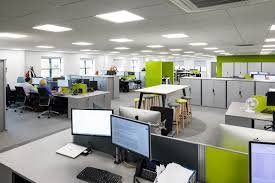
The Collaborative Hub is designed to facilitate teamwork and open communication. This layout minimizes physical barriers like high cubicle walls and private offices, instead favoring large shared tables, open seating areas, and clusters of workstations. The core idea is to create a vibrant, energetic atmosphere where ideas can be exchanged freely and spontaneously. By placing teams in close proximity, you naturally encourage brainstorming sessions and quicker problem-solving. This model is particularly effective for creative teams, marketing departments, and project-based groups that thrive on constant interaction.
To make this layout successful, it’s crucial to balance the open space with designated quiet zones. While constant collaboration is beneficial, employees also need areas where they can concentrate without distractions. Incorporating small, soundproof pods or quiet corners allows individuals to retreat for focused work, making the overall environment more functional. For instance, a software development team might use a large communal table for daily stand-ups and pair programming but rely on individual pods for complex coding tasks. This balance ensures that both collaborative and individual work needs are met, maximizing overall productivity.
2. The Activity-Based Working (ABW) Model
Activity-Based Working is a highly flexible layout that empowers employees to choose a workspace that best suits their task at hand. Instead of assigning a permanent desk to each person, an ABW office provides a variety of settings, such as quiet zones for concentration, collaborative areas for team meetings, casual lounge spaces for informal chats, and private booths for confidential calls. This approach acknowledges that an employee’s work needs can change throughout the day. For example, a sales representative might start their morning in a quiet booth to make calls, move to a collaborative zone for a team strategy session, and end their day in a comfortable lounge to catch up on emails.
This model is built on trust and autonomy, giving employees control over their work environment, which has been shown to increase job satisfaction and engagement. A report from the Journal of Environmental Psychology highlighted that employees with more control over their workspace reported higher levels of focus and creativity. To implement ABW effectively, organizations must provide the necessary technology, like laptops and robust Wi-Fi, to support seamless transitions between different work settings. The result is a dynamic and empowering environment that adapts to the diverse activities of a modern workforce.
3. The Zoned or Neighborhood Layout
The Zoned Layout, also known as the “neighborhood” model, is a hybrid approach that groups employees into specific zones based on their department or project team. Each zone or neighborhood is equipped with a mix of workspaces tailored to the group’s specific functions, such as open desks, private offices, meeting rooms, and lounge areas. This creates a sense of community and identity within each team while still allowing for cross-functional collaboration in shared common areas, like a central café or a large multi-purpose room. For instance, the marketing neighborhood might have a large whiteboard wall for brainstorming, while the finance zone could feature more enclosed spaces for focused, confidential work.
This layout strikes a balance between the complete openness of a collaborative hub and the siloed nature of traditional office plans. By providing each team with its own dedicated space, it fosters a strong sense of belonging and makes it easier to manage resources. When considering furniture for such a layout, finding a versatile office desk in Las Vegas or other major cities can be key to creating adaptable workstations within each zone. The neighborhood model supports team-specific workflows while still providing opportunities for the serendipitous encounters that spark innovation across the entire organization.
4. The Hybrid-Flexible Model
With the rise of remote and flexible work schedules, the Hybrid-Flexible office layout has become increasingly popular. This model is designed to support a workforce that splits its time between the office and home. The physical office space becomes less about housing every employee every day and more about providing a central hub for collaboration, client meetings, and company culture-building events. The layout often features a higher ratio of meeting rooms and collaborative spaces to individual desks. Many companies are adopting “hot-desking,” where employees don’t have assigned seats but can book a desk or workspace through an app when they plan to come into the office.
This approach offers significant benefits, including reduced real estate costs and access to a wider talent pool not limited by geography. According to a Gallup poll, 59% of employees prefer a hybrid work model, indicating that offering this flexibility can be a major competitive advantage in attracting and retaining top talent. To succeed, a hybrid layout must be supported by strong digital infrastructure, ensuring that remote and in-office employees can collaborate seamlessly. The office transforms from a daily requirement into a destination for purposeful interaction, strengthening team bonds and driving key projects forward.